
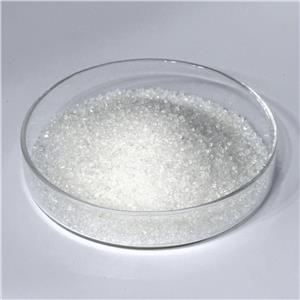
PYRROLIDINYL DIAMINOPYRIMIDINE OXIDE
An ingredient primarily prevents hair loss and promotes growth by opening potassium channels to improve blood flow to follicles, stimulating cell proliferation, and transitioning hairs into the active growth phase.
Overview
PYRROLIDINYL DIAMINOPYRIMIDINE OXIDE is an effective ingredient to prevent hair loss and promote growth. As a potassium channel opener, it dilates blood vessels around follicles, enhancing nutrient delivery. It stimulates dermal papilla cell proliferation, relaxes vascular structures, and supplies essential nutrients, transitioning follicles from telogen to anagen phase and extending growth duration for stronger, thicker hair. Ideal for anti-hair loss essences, masks, and conditioners. Recommended: 0.5%-2% for prevention; 2%-5% for treatment. Dissolve in lipophilic solvent before use.
Synonyms: Kopyrrol;2,4-Diamino-6-pyrrolidinopyrimidine 3-oxide; 6-(1-Pyrrolidinyl)-2,4-pyrimidinediamine 3-oxide;6-(pyrrolidin-1-yl)pyrimidine-2,4-diamine 3-oxide; 2,4-PyriMidinediaMine,6-(1-pyrrolidinyl)-, 3-oxide; 2,6-diamino-4-(pyrrolidin-1-yl)pyrimidine 1-oxide;3-oxy-6-pyrrolidin-1-yl-pyrimidine-2,4-diamine; PYRROLIDINYL DIAMINOPYRIMIDINE OXIDE ISO 9001:2015 REACH
EINECS: 618-347-7
Mol File: 55921-65-8.mol
Physicochemical Properties
Melting point: 278 ℃
Boiling point: 549.3±60.0 °C
Storage temp: 2-8°C (protect from light)
Pka: 4.89±0.10
MSDS Information
Experimental Data
Pharmacodynamics
Mechanism Of Action
Also known as Kopyrrol, this compound is used in hair care products to promote growth. Its mechanism of action primarily involves vasodilation around hair follicles through acting as a potassium channel opener, which improves blood circulation and nutrient delivery to the scalp. This helps repair weakened follicle cells, prolongs the anagen (growth) phase of the hair cycle, and increases hair volume by facilitating transitions between growth phases. However, the exact mechanisms remain partially unclear and require further study.
Similar Products
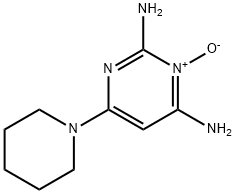
Minoxidil
Therapy
: Dermatology
Target
: VGKCs
CAS
: 38304-91-5
MF
: C9H15N5O
MW
: 209.25
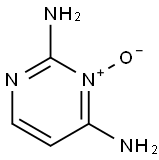
Diaminopyrimidine oxide
Therapy
: Dermatology
Target
:
CAS
: 74638-76-9
MF
: C4H6N4O
MW
: 126.12
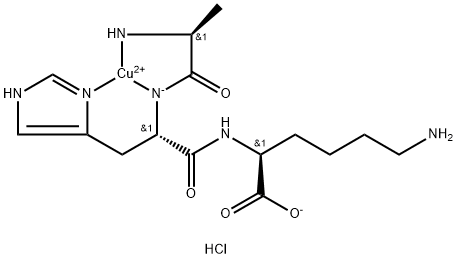
AHK-Cu
Therapy
: Dermatology
Target
:
CAS
: 682809-81-0
MF
: C15H24ClCuN6O4
MW
: 451.39
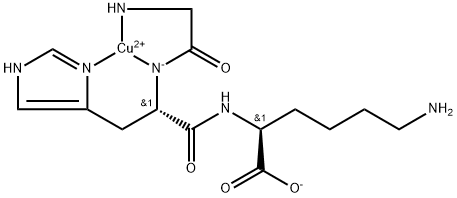
GHK-Cu
Therapy
: Dermatology
Target
:
CAS
: 89030-95-5
MF
: C14H21CuN6O4
MW
: 400.91