
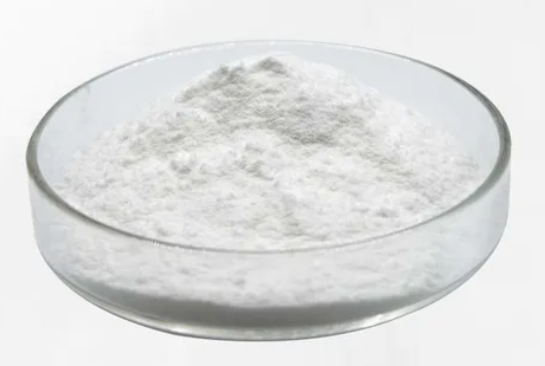
Clascoterone
A topical androgen receptor inhibitor developed for the treatment of androgenetic alopecia. It works by locally blocking dihydrotestosterone (DHT) in hair follicles, thereby counteracting hair follicle miniaturization while minimizing systemic side effects.
Overview
Clascoterone is a novel topical androgen receptor inhibitor that offers a precise mechanism for addressing androgenetic alopecia. It acts directly on the androgen receptors within hair follicles, effectively blocking the binding of dihydrotestosterone (DHT). This action neutralizes the DHT-driven signals that cause follicle miniaturization and growth suppression. With a safety profile already established in topical acne treatment, Clascoterone presents significant promise for developing effective and well-tolerated topical hair loss solutions, ideal for minimizing systemic side effects.
Synonyms: Cortexolone 17alpha-propionate;clascoterone cream 1% w/w (克拉考特酮,CB-03-01); 17alpha-propionate;CB-03-1;17alpha-propio17-(1-oxopropoxy)pregn-4-ene-3,20-dione; CB-03-0117alpha-propionate; Cortexolone17-alpha-propionate; 17alpha-propionate(CB-03-01); 21-Hydroxy-17-(1-oxopropoxy)pregn-4-ene-3,20-dione
EINECS: 685-282-9
Product Categories: APIs; 17-Hydroxycorticosteroids; Acids, Acyclic; Adrenal Cortex Hormones; Androgen Receptor Antagonists; Antiandrogens
Mol File: 19608-29-8.mol
Physicochemical Properties
Boiling point: 538.9±50.0 °C
Storage temp: Store at -20°C
Solubility: Soluble in DMSO
Pka: 12.98±0.10
Form: Powder
Color: White to light yellow
MSDS Information
Experimental Data
1.Cell Experiment
Solubility in DMSO: ≥ 100 mg/mL (248.43 mM)
"≥" indicates soluble, but the saturation concentration is unknown.
Preparing Stock Solutions:
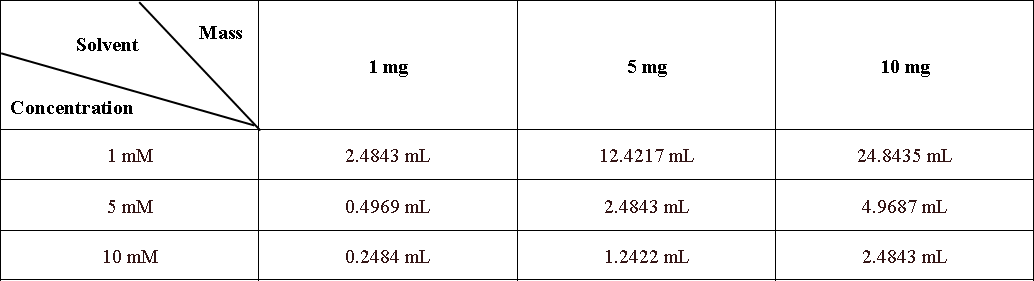
Please select an appropriate solvent to prepare a stock solution based on the product's solubility in different solvents. Once prepared, aliquot the solution and store it to avoid product inactivation caused by repeated freeze-thaw cycles.
Stock solution storage and expiration date: -80°C, 2 years; -20°C, 1 year. When stored at -80°C, use within 2 years; when stored at -20°C, use within 1 year.
2.Animal Experiment
Please select an appropriate dissolution protocol based on your experimental animals and route of administration. For the following protocols, first prepare a clear stock solution according to the In Vitro method, and then add the co-solvents sequentially.
To ensure experimental reliability, the clear stock solution can be stored appropriately according to the storage conditions. For in vivo working solutions, it is recommended to prepare them freshly on the day of use.
The percentage indicated before each solvent refers to its volume ratio in the final solution. If precipitation or crystallization occurs during preparation, heating and/or sonication can be used to improve dissolution.
Protocol 1
Add each solvent in the following order: 10% DMSO → 40% PEG300 → 5% Tween-80 → 45% Saline
Solubility: ≥ 2.75 mg/mL (6.83 mM); Clear solution
This protocol yields a clear solution of ≥ 2.75 mg/mL (6.83 mM, saturation unknown).
Example for 1 mL of working solution:
Take 100 μL of a 27.5 mg/mL clear DMSO stock solution and add it to 400 μL of PEG300, mix well. Then add 50 μL of Tween-80 to the mixture and mix thoroughly. Finally, add 450 μL of saline to adjust the volume to 1 mL.
Protocol 2
Add each solvent in the following order: 10% DMSO → 90% (20% SBE-β-CD in Saline)
Solubility: ≥ 2.75 mg/mL (6.83 mM); Clear solution
This protocol yields a clear solution of ≥ 2.75 mg/mL (6.83 mM, saturation unknown).
Example for 1 mL of working solution:
Take 100 μL of a 27.5 mg/mL clear DMSO stock solution and add it to 900 μL of 20% SBE-β-CD in saline. Mix well.
Protocol 3
Add each solvent in the following order: 10% DMSO → 90% Corn Oil
Solubility: ≥ 2.75 mg/mL (6.83 mM); Clear solution
This protocol yields a clear solution of ≥ 2.75 mg/mL (6.83 mM, saturation unknown). This protocol is not suitable for experiments lasting longer than half a month.
Example for 1 mL of working solution:
Take 100 μL of a 27.5 mg/mL clear DMSO stock solution and add it to 900 μL of corn oil. Mix well.
Pharmacodynamics
Clascoterone exerts anti-androgenic effects by working as an antagonist at androgen receptors (ARs) expressed throughout the skin, including sebaceous glands, sebocytes, and dermal papilla cells. Clascoterone blocks the effects of testosterone and dihydrotestosterone (DHT), which are androgens that bind to the ARs and contribute to the development of androgen-dependent conditions such as acne and alopecia. In vitro, the antiandrogenic effects of clascoterone in human primary sebocytes occurred in a dose-dependent manner. Clascoterone mediates selective topical activity by mainly targeting androgen receptors at the site of application. It has limited systemic effects.
In clinical trials, HPA axis suppression was observed as a 30-minute post-stimulation serum cortisol level of ≤18 mcg/dL in 5% of adult subjects and 9% of adolescent subjects with acne vulgaris following two weeks of topical treatment of clascoterone. HPA axis function returned to normal following the discontinuation of drug treatment.
Mechanism Of Action
Acne is a multifactorial skin condition characterized by excess sebum production, epithelial hyperkeratinization, proliferation of the skin commensal bacteria, and inflammation. Circulating and locally synthesized natural ligands, testosterone and dihydrotestosterone (DHT), serve as causative factors in both males and females. Upon binding of DHT, the DHT-androgen receptor complex dimerizes and translocates to the nucleus where it promotes the transcription of genes involved in acne pathogenesis, including proliferation and differentiation of sebocytes, excess sebum production, and inflammatory cytokine production. Clascoterone is a potent antagonist at ARs and competes for androgens in binding to the receptor, thereby inhibiting downstream signalling of ARs that promote acne. Androgenetic alopecia is also an androgen-dependent and highly genetic condition. Dihydrotestosterone (DHT) binds to ARs expressed on dermal papilla cells (DPC) in the scalp to induce AR-mediated transcription of genes that contribute to androgenic alopecia. By blocking the interaction between DHT and aARs, clascoterone inhibits AR-regulated transcription and DHT-induced IL-6 synthesis.
Similar Products
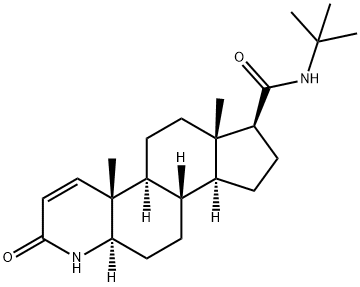
Finasteride
Therapy
: Genitourinary
Target
: SRD5A
CAS
: 98319-26-7
MF
: C23H36N2O2
MW
: 372.54
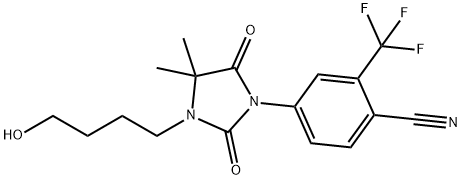
RU 58841
Therapy
: Dermatology
Target
: AR
CAS
: 154992-24-2
MF
: C17H18F3N3O3
MW
: 369.34
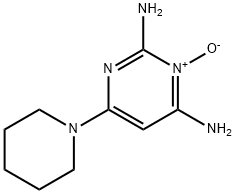
Minoxidil
Therapy
: Dermatology
Target
: VGKCs
CAS
: 38304-91-5
MF
: C9H15N5O
MW
: 209.25
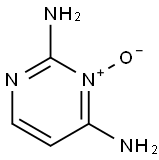
Diaminopyrimidine oxide
Therapy
: Dermatology
Target
:
CAS
: 74638-76-9
MF
: C4H6N4O
MW
: 126.12