
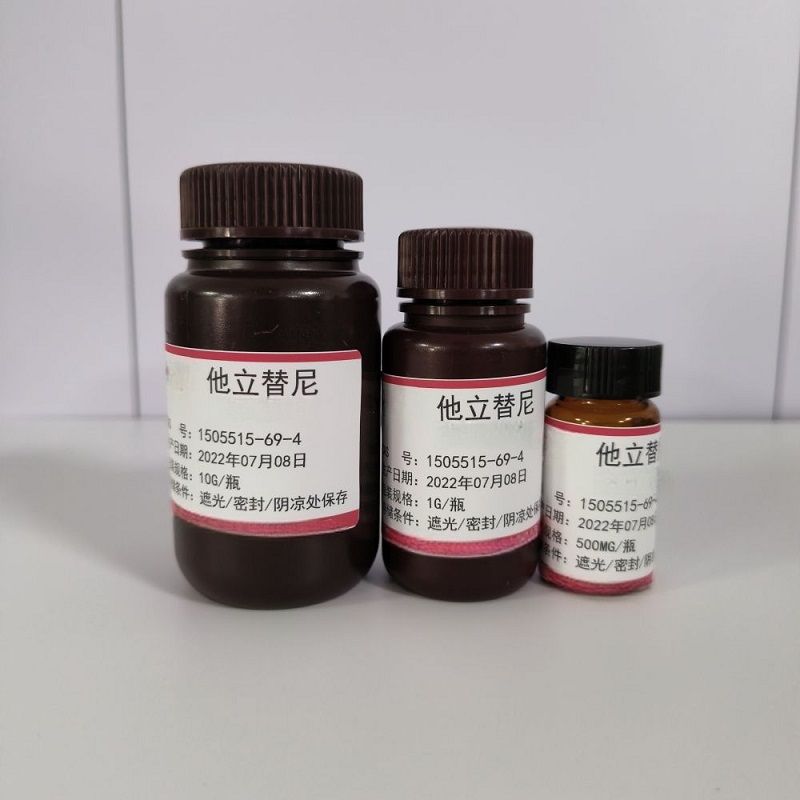
Taletrectinib
A small molecule ROS1 inhibitor, a kinase inhibitor. It is indicated for the treatment of advanced ROS1-positive non-small cell lung cancer.
Overview
Taletrectinib is an orally available small molecule kinase inhibitor that effectively targets the ROS1 proto-oncogene and TRK kinase family. It demonstrates potent activity against both primary and resistant ROS1 mutations, including the G2032R solvent-front mutation, representing a next-generation therapeutic option for patients with ROS1-positive non-small cell lung cancer.
Synonyms: Taletrectinibadipate; Taletrectinib; Taletrectinib(DS-6051b); AB-106; TaletrectinibAB-106; mutations, inhibit, ROSKinase, antitumor, AB106, Taletrectinib, glioblastoma, Inhibitor, colorectal, AB106, cancer, NSCLC, rearrangementChemicalbook; DS-6051a; DS-6051; IBI-344; DOVBLERON; IBTROZI; Taletrectinib-adipate; taletrectinib adipate
Product Categories: BCRP/ABCG2 Inhibitors; Cytochrome P-450 CYP1A2 Inducers; Cytochrome P-450 CYP2C8 Inhibitors; Cytochrome P-450 Enzyme Inducers; Cytochrome P-450 Enzyme Inhibitors; Cytochrome P-450 Substrates; Kinase Inhibitor; OATP1B1/SLCO1B1 Inhibitors; P-glycoprotein inhibitors; P-glycoprotein substrates; QTc Prolonging Agents; ROS1 tyrosine kinase inhibitors; Tyrosine Kinase Inhibitors
Mol File: 1505515-69-4.mol
Physicochemical Properties
Storage temp: -20°C
Solubility: DMSO: 50 mg/mL (90.64 mM; Need ultrasonic)
Form: Solid
Color: White to Off-white
MSDS Information
Experimental Data
1. Cell Experiment
DMSO : 50 mg/mL (90.64 mM; Need ultrasonic)
Preparing Stock Solutions:
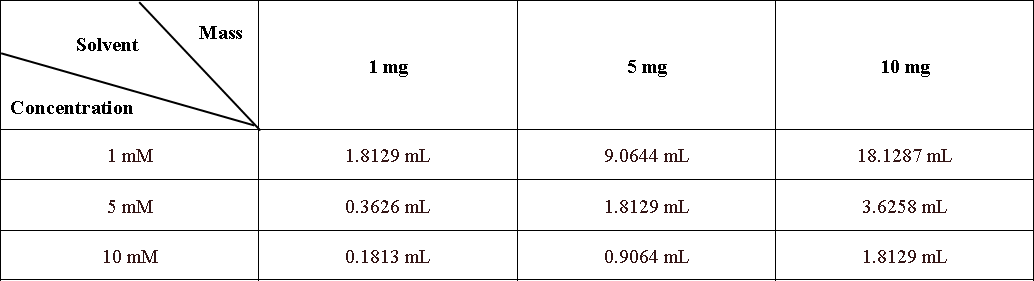
Please select an appropriate solvent for preparing stock solutions based on the product's solubility in different solvents. Once prepared, the solution should be aliquoted and stored to avoid product degradation caused by repeated freeze-thaw cycles. Storage conditions and duration for stock solutions: -80°C, 6 months; -20°C, 1 month (sealed storage, away from moisture). When stored at -80°C, use within 6 months; when stored at -20°C, use within 1 month.
2. Animal Experiment
Please select an appropriate dissolution protocol based on your experimental animals and route of administration. For the following protocols, first prepare a clear stock solution following the in vitro method, then add cosolvents sequentially:
To ensure experimental reliability, the clear stock solution can be appropriately stored according to storage conditions. For in vivo working solutions, it is recommended to prepare them fresh and use on the same day. The percentage indicated before each solvent represents its volume ratio in the final solution. If precipitation occurs during preparation, heating and/or ultrasonication can be used to aid dissolution.
Protocol 1
Add solvents in order: 10% DMSO → 40% PEG300 → 5% Tween-80 → 45% saline
Solubility: ≥ 2.08 mg/mL (3.77 mM); Clear solution
This protocol yields a clear solution of ≥ 2.08 mg/mL (3.77 mM, saturation unknown).
Example for 1 mL working solution: Add 100 μL of 20.8 mg/mL clear DMSO stock solution to 400 μL PEG300 and mix well. Add 50 μL Tween-80 to the mixture and mix thoroughly. Then add 450 μL saline to bring the volume to 1 mL.
Protocol 2
Add solvents in order: 10% DMSO → 90% (20% SBE-β-CD in saline)
Solubility: ≥ 2.08 mg/mL (3.77 mM); Clear solution
This protocol yields a clear solution of ≥ 2.08 mg/mL (3.77 mM, saturation unknown).
Example for 1 mL working solution: Add 100 μL of 20.8 mg/mL clear DMSO stock solution to 900 μL of 20% SBE-β-CD in saline and mix well.
Protocol 3
Add solvents in order: 10% DMSO → 90% corn oil
Solubility: ≥ 2.08 mg/mL (3.77 mM); Clear solution
This protocol yields a clear solution of ≥ 2.08 mg/mL (3.77 mM, saturation unknown). This method is not suitable for experiments lasting longer than half a month.
Example for 1 mL working solution: Add 100 μL of 20.8 mg/mL clear DMSO stock solution to 900 μL corn oil and mix well.
Pharmacodynamics
Taletrectinib inhibits the growth of cancer cells expressing ROS1 fusion genes and mutations. In mice subcutaneously implanted with tumors harboring ROS1 fusions, including the G2032R mutation, administration of taletrectinib resulted in tumor growth inhibition. Taletrectinib had anticancer activity in an intracranial NSCLC xenograft model harboring a ROS1 fusion. Taletrectinib has demonstrated high and durable responses, robust activity against intracranial lesions and acquired mutations, including G2032R, and a relatively favorable safety with low incidence of neurologic adverse events.
Mechanism Of Action
Taletrectinib is an inhibitor of tyrosine kinase ROS1, including ROS1 resistance mutations. It also exhibits inhibitory effects on tropomyosin receptor kinases (TRKs) TRKA, TRKB, and TRKC. Fusion proteins that include ROS1 domains can drive tumorigenic potential through hyperactivation of downstream signaling pathways, leading to unconstrained cell proliferation.
Similar Products
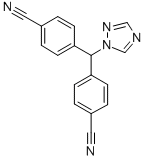
Letrozole
Therapy
: Oncology
Target
: ERs;Aromatase
CAS
: 112809-51-5
MF
: C17H11N5
MW
: 285.3

Oxaliplatin
Therapy
: Oncology
Target
: DNA
CAS
: 61825-94-3
MF
: C8H12N2O4Pt
MW
: 395.28
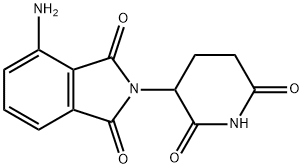
Pomalidomide
Therapy
: Oncology
Target
: TNFα;IKZF1;IKZF3;IL6
CAS
: 19171-19-8
MF
: C13H11N3O4
MW
: 273.24
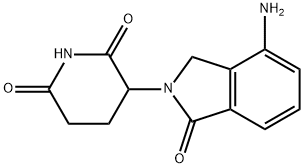
Lenalidomide
Therapy
: Oncology
Target
: CSNK1A1;IKZF1;IKZF3;CRBN
CAS
: 191732-72-6
MF
: C13H13N3O3
MW
: 259.261