
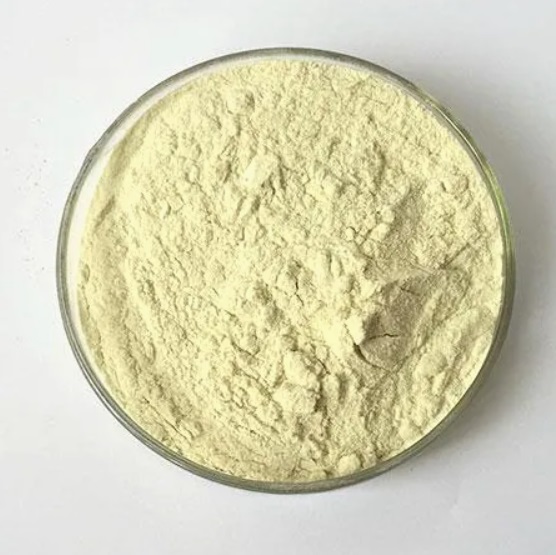
Pomalidomide
An analog of thalidomide; an immunomodulatory agent; used to treat multiple myeloma.
Overview
Pomalidomide is a potent oral immunomodulatory drug (IMiD) and a thalidomide analog, with immunomodulatory, anti-angiogenic, and direct tumor cell proliferation-inhibiting effects. It specifically binds to the cereblon (CRBN) protein, mediating the ubiquitination and degradation of transcription factors IKZF1 (Ikaros) and IKZF3 (Aiolos), thereby regulating immune cell function and the tumor microenvironment. Pomalidomide can be used in research related to hematological diseases and solid tumors such as relapsed/refractory multiple myeloma (RRMM), myelodysplastic syndromes (MDS), and Kaposi's sarcoma (KS).
Synonyms: IMID-4047; CDC-394; IMiD-1; Pomalyst; Imnovid; Actimid; Pomalidomida; Pomalidomidum; IMiD 3; CC-4047; ActiMid; Pomalidomide; Pomalidomide-d4; Pomalidomide(CC-4047); Pomalidomide(CC-4047,Actimid); 3-amino-N-(2,6-dioxo-3-piperidyl)phthalimide; 3-Amino-N-(2,6-dioxo-3-piperidyl)phthalimide; 4-Amino-2-(2,6-dioxo-3-piperidyl)isoindoline-1,3-dione
EINECS: 805-902-5
Product Categories: Small molecule inhibitors; Halogenated hydrocarbons; Acyl halides; Pharmaceutical APIs; Cell signaling pathway inhibitors; Treatment of multiple myeloma; Intermediates
Mol File: 19171-19-8.mol
Physicochemical Properties
Melting point: 318.5 - 320.5℃
Storage temp: 2-8°C
Solubility: DMSO: ≥ 14 mg/mL
Form: Powder
Color: Light Yellow to Green Yellow
Stability: The solution can be stored in DMSO at -20℃ for up to 1 month.
MSDS Information
Experimental Data
1. Cell Experiment
Solubility in DMSO: 50 mg/mL (182.99 mM; solubilized by ultrasound; hygroscopic DMSO significantly affects product solubility, so use freshly opened DMSO).
Preparing Stock Solutions:
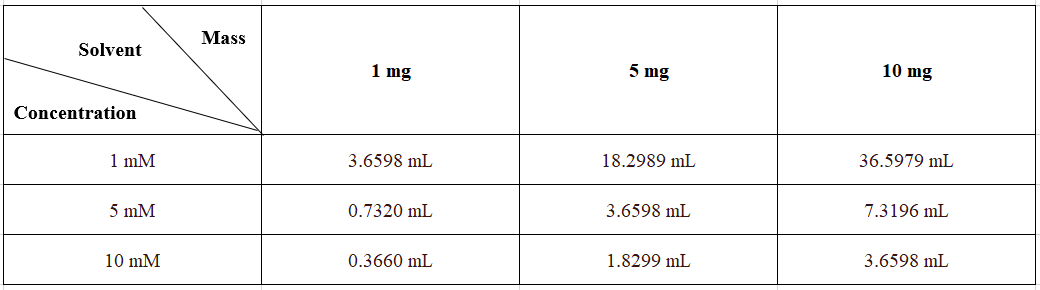
Please prepare the stock solution in the appropriate solvent based on the product's solubility in different solvents. Once prepared, aliquot and store to avoid product degradation caused by repeated freeze-thaw cycles.
Storage and expiration date of the stock solution: -80°C, 1 year; -20°C, 6 months. When stored at -80°C, use within 1 year; when stored at -20°C, use within 6 months.
2.Animal Experiment
Please select the appropriate dissolution method based on your experimental animals and administration method.
For the following dissolution methods, first prepare a clear stock solution in vitro, then add cosolvents in sequence:
To ensure reliable experimental results, the clear stock solution can be stored appropriately according to storage conditions. For in vivo experiments, it is recommended that the working solution be prepared fresh and used the same day.
The percentage displayed before the solvent below refers to the volume percentage of the solvent in the final solution. If precipitation or precipitation occurs during the preparation process, heating and/or sonication can be used to aid dissolution.
Protocol 1
Add each solvent in order: 10% DMSO, 40% PEG300, 5% Tween-80, 45% Saline.
Solubility: ≥ 2.5 mg/mL (9.15 mM); Clear Solution
This protocol produces a clear solution with a concentration of ≥ 2.5 mg/mL (saturation unknown).
For a 1 mL working solution, add 100 μL of the 25.0 mg/mL clear DMSO stock solution to 400 μL of PEG300 and mix thoroughly. Add 50 μL of Tween-80 to the solution and mix thoroughly. Then, add 450 μL of normal saline to bring the volume to 1 mL.
To prepare normal saline: Dissolve 0.9 g of sodium chloride in ddH₂O and dilute to 100 mL. This will yield a clear, transparent normal saline solution.
Protocol 2
Please add each solvent in order: 10% DMSO, 90% corn oil.
Solubility: ≥ 2.5 mg/mL (9.15 mM); Clear solution
This protocol produces a clear solution of ≥ 2.5 mg/mL (saturation unknown). This protocol should be used for animal experiments with experimental durations exceeding two weeks.
For a 1 mL working solution, add 100 μL of the 25.0 mg/mL clear DMSO stock solution to 900 μL of corn oil and mix thoroughly.
For the following dissolution schemes, prepare the working solution directly. It is recommended to prepare immediately and use it as soon as possible. The percentage indicated before the solvent below indicates the volume percentage of the solvent in the final solution. If precipitation or precipitation occurs during the preparation process, heating and/or sonication can be used to aid solubilization.
Protocol 1
Add each solvent in order: 0.5% CMC-Na/0.5% Tween-80 in saline water
Solubility: 10 mg/mL (36.60 mM); Suspension; Ultrasonication
Pharmacodynamics
Pomalidomide is more potent than thalidomide (100-times) and lenalidomide (10-times).
Mechanism Of Action
Promalidomide is an immunomodulatory agent with antineoplastic activity. It is shown to inhibit the proliferation and induce apoptosis of various tumour cells. Furthermore, promalidomide enhances T cell and natural killer (NK) cell-mediated immunity and inhibited the production of pro-inflammatory cytokines, like TNF-alpha or IL-6, by monocytes. The primary target of promalidomide is thought to be the protein cereblon. It binds to this target and inhibits ubiquitin ligase activity. It is also a transcriptional inhibitor of COX2.
Similar Products
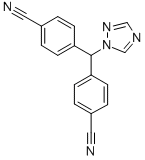
Letrozole
Therapy
: Oncology
Target
: ERs;Aromatase
CAS
: 112809-51-5
MF
: C17H11N5
MW
: 285.3
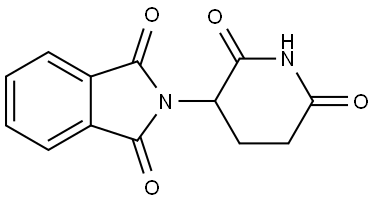
Thalidomide
Therapy
: Oncology
Target
: Ligands for E3 Ligase; Autophagy; Apoptosis; Molecular Glues
CAS
: 50-35-1
MF
: C13H10N2O4
MW
: 258.23
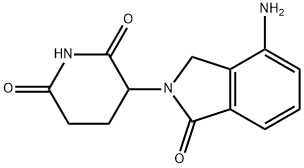
Lenalidomide
Therapy
: Oncology
Target
: CSNK1A1;IKZF1;IKZF3;CRBN
CAS
: 191732-72-6
MF
: C13H13N3O3
MW
: 259.261
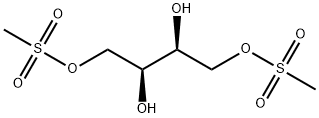
Treosulfan
Therapy
: Oncology
Target
: DNA
CAS
: 299-75-2
MF
: C6H14O8S2
MW
: 278.3