
CIS-CLOMIPHENE HCL
A triphenyl ethylene stilbene derivative which is an estrogen agonist or antagonist depending on the target tissue.
Overview
CIS-CLOMIPHENE HCl is a cis isomer of Clomiphene citrate (HY-B0463). It is orally active and has an antiestrogenic effect. It can reduce cholesterol levels. It can be for the researches of endocrinology and metabolic disease.
Synonyms: MSS-722;VERU-722; Clomifenum; Clomifeno; Clomiphene; Isomer A; RMI-16312; zuclomifene; Zuclomiphene; cis-clomifene; Cisclomifenum; cis-clomiphene; (Z)-Clomiphene; Z-CloMiphene-d4
Product Categories: Benzene Derivatives; Estrogen Agonist-antagonists; Genito Urinary System and Sex Hormones; Hormone Antagonists; P-glycoprotein substrates; Sex Hormones and Modulators of the Genital System; Stilbenes; Estrogen Receptor Modulators
Mol File: 15690-55-8.mol
Physicochemical Properties
Melting point: 156.5-158.0℃
Boiling point: 509.0±50.0°C(Predicted)
Storage temp: 2-8°C
Solubility: DMSO: 2mg/mL, clear
Form: Powder
Color: White to Beige
MSDS Information
Experimental Data
Pharmacodynamics
Clomifene (previously clomiphene) is an orally administered, non steroidal, ovulatory stimulant that acts as a selective estrogen receptor modulator (SERM). Clomifene can lead to multiple ovulation, and hence increase the risk of conceiving twins. In comparison to purified FSH, the rate of ovarian hyperstimulation syndrome is low. There may be an increased risk of ovarian cancer and weight gain. Clomifene is capable of interacting with estrogen-receptor-containing tissues, including the hypothalamus, pituitary, ovary, endometrium, vagina, and cervix. It may compete with estrogen for estrogen-receptor-binding sites and may delay replenishment of intracellular estrogen receptors. Clomifene initiates a series of endocrine events culminating in a preovulatory gonadotropin surge and subsequent follicular rupture. The first endocrine event, in response to a course of clomifene therapy, is an increase in the release of pituitary gonadotropins. This initiates steroidogenesis and folliculogenesis resulting in growth of the ovarian follicle and an increase in the circulating level of estradiol. Following ovulation, plasma progesterone and estradiol rise and fall as they would in a normal ovulatory cycle.
Mechanism Of Action
Clomifene has both estrogenic and anti-estrogenic properties, but its precise mechanism of action has not been determined. Clomifene appears to stumulate the release of gonadotropins, follicle-stimulating hormone (FSH), and leuteinizing hormone (LH), which leads to the development and maturation of ovarian follicle, ovulation, and subsequent development and function of the coprus luteum, thus resulting in pregnancy. Gonadotropin release may result from direct stimulation of the hypothalamic-pituitary axis or from a decreased inhibitory influence of estrogens on the hypothalamic-pituitary axis by competing with the endogenous estrogens of the uterus, pituitary, or hypothalamus. Clomifene has no apparent progestational, androgenic, or antrandrogenic effects and does not appear to interfere with pituitary-adrenal or pituitary-thyroid function.
Similar Products
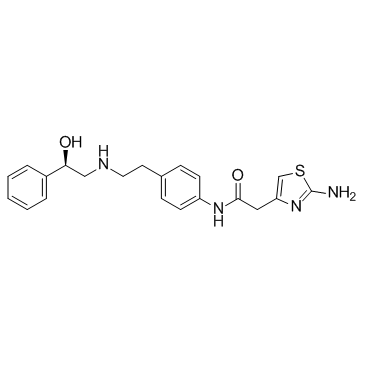
Mirabegron
Therapy
: Genitourinary
Target
: ADRB3
CAS
: 223673-61-8
MF
: C21H24N4O2S
MW
: 396.51
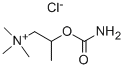
Bethanechol Chloride
Therapy
: Genitourinary
Target
: CHRM2
CAS
: 590-63-6
MF
: C7H17ClN2O2
MW
: 196.68

Clomiphene Citrate
Therapy
: Women's health
Target
: ERs
CAS
: 50-41-9
MF
: C32H36ClNO8
MW
: 598.08

trans-Clomiphene Citrate
Therapy
: Women's health
Target
: Estrogen Receptor/ERR
CAS
: 7599-79-3
MF
: C32H36ClNO8
MW
: 598.08314