
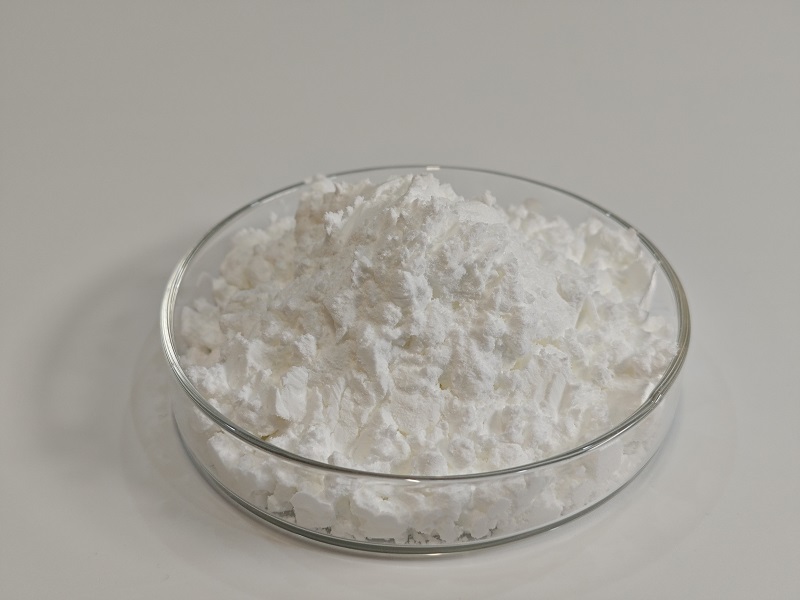
Trospium Chloride
A medication used to treat an overactive bladder, a condition that can cause increased urination and inability to control urination.
Overview
Trospium is an antispasmodic agent used to treat the symptoms of overactive bladder, a condition that causes the bladder muscles to contract uncontrollably. An overactive bladder leads to an increased urge to urinate, frequent urination, and sometimes, loss of control over urination.
Synonyms: Trospium; IP-631; Trosec; Sanctura; Uraplex; Spasmex; Regurin; Spasmoplex; Chlorure de trospium; Cloruro de trospio; Trospii chloridum
Product Categories: Active Pharmaceutical Ingredient (API); Pharmaceutical Active Pharmaceutical Ingredient-Research Raw Material; Gastrointestinal & Genitourinary System Category
Mol File:10405-02-4.mol
Physicochemical Properties
Melting point: 266-268°C
Storage temp: Inert atmosphere, 2-8°C
Solubility: Very soluble in water, soluble in methanol, practically insoluble in dichloromethane
Form: Solid
Color: White to Off-white
MSDS Information
Experimental Data
Animal Experiment
Please select an appropriate dissolution protocol based on your experimental animals and route of administration.
The following dissolution protocols require first preparing a clear stock solution according to the In Vitro method, followed by sequential addition of cosolvents:
—To ensure the reliability of experimental results, the clear stock solution can be stored appropriately according to the storage conditions. For in vivo working solutions, it is recommended to prepare them fresh and use on the same day.
The percentage displayed before each solvent indicates the volume ratio of the solvent in the final solution. If precipitation or crystallization occurs during preparation, dissolution can be assisted by heating and/or ultrasonication.
Protocol 1
Add each solvent in sequence: 10% DMSO → 40% PEG300 → 5% Tween-80 → 45% Saline
Solubility: ≥ 2.5 mg/mL (5.84 mM); clear solution
This protocol yields a clear solution of ≥ 2.5 mg/mL (saturation unknown).
Take 1 mL of working solution as an example: add 100 μL of a 25.0 mg/mL clear DMSO stock solution to 400 μL of PEG300 and mix well; then add 50 μL of Tween-80 to the system and mix well; finally, add 450 μL of saline to bring the volume to 1 mL.
Preparation of saline: dissolve 0.9 g of sodium chloride in ddH₂O and bring the volume to 100 mL to obtain a clear saline solution.
Protocol 2
Add each solvent in sequence: 10% DMSO → 90% (20% SBE-β-CD in Saline)
Solubility: ≥ 2.5 mg/mL (5.84 mM); clear solution
This protocol yields a clear solution of ≥ 2.5 mg/mL (saturation unknown).
Take 1 mL of working solution as an example: add 100 μL of a 25.0 mg/mL clear DMSO stock solution to 900 μL of 20% SBE-β-CD in saline and mix well.
Dissolve 2 g of SBE-β-CD (sulfobutylether β-cyclodextrin) powder in saline and bring the volume to 10 mL until fully dissolved to obtain a clear solution.
Protocol 3
Add each solvent in sequence: 10% DMSO → 90% Corn Oil
Solubility: ≥ 2.5 mg/mL (5.84 mM); clear solution
This protocol yields a clear solution of ≥ 2.5 mg/mL (saturation unknown). This protocol can be considered for animal experiments with a duration of more than half a month.
Take 1 mL of working solution as an example: add 100 μL of a 25.0 mg/mL clear DMSO stock solution to 900 μL of corn oil and mix well.
For the following dissolution protocols, prepare the working solution directly. It is recommended to prepare fresh and use as soon as possible. The percentage displayed before each solvent indicates the volume ratio of the solvent in the final solution. If precipitation or crystallization occurs during preparation, dissolution can be assisted by heating and/or ultrasonication.
Protocol 1
Add each solvent in sequence: PBS
Solubility: 100 mg/mL (233.67 mM); clear solution; ultrasonication required for dissolution.
Pharmacodynamics
Trospium is an antispasmodic, antimuscarinic agent indicated for the treatment of overactive bladder with symptoms of urge urinary incontinence, urgency, and urinary frequency. According to receptor assays, it displays higher affinity towards muscarininc receptors compared to nicotinic receptors at therapeutic concentrations.
Mechanism Of Action
Trospium antagonizes the effect of acetylcholine on muscarinic receptors in cholinergically innervated organs. Its parasympatholytic action reduces the tonus of smooth muscle in the bladder.
Similar Products
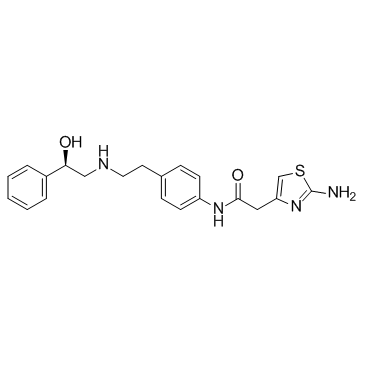
Mirabegron
Therapy
: Genitourinary
Target
: ADRB3
CAS
: 223673-61-8
MF
: C21H24N4O2S
MW
: 396.51
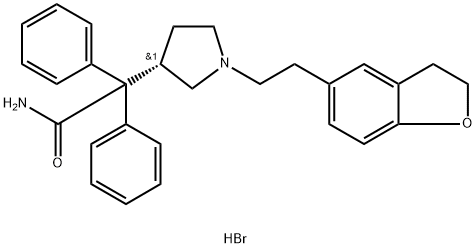
Darifenacin HBr
Therapy
: Genitourinary
Target
: CHRM3
CAS
: 133099-07-7
MF
: C28H31BrN2O2
MW
: 507.47
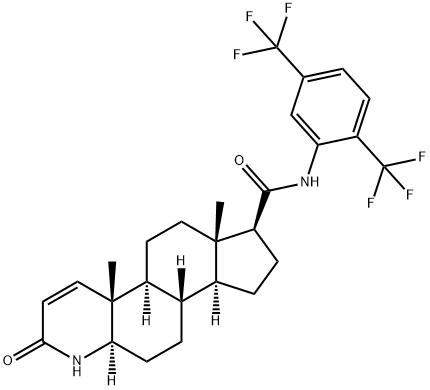
Dutasteride
Therapy
: Genitourinary
Target
: SRD5A
CAS
: 164656-23-9
MF
: C27H30F6N2O2
MW
: 528.53
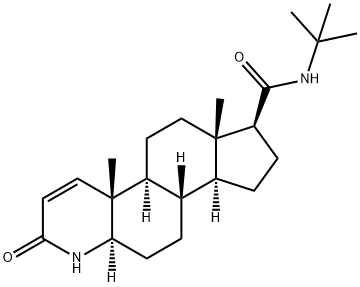
Finasteride
Therapy
: Genitourinary
Target
: SRD5A
CAS
: 98319-26-7
MF
: C23H36N2O2
MW
: 372.54