
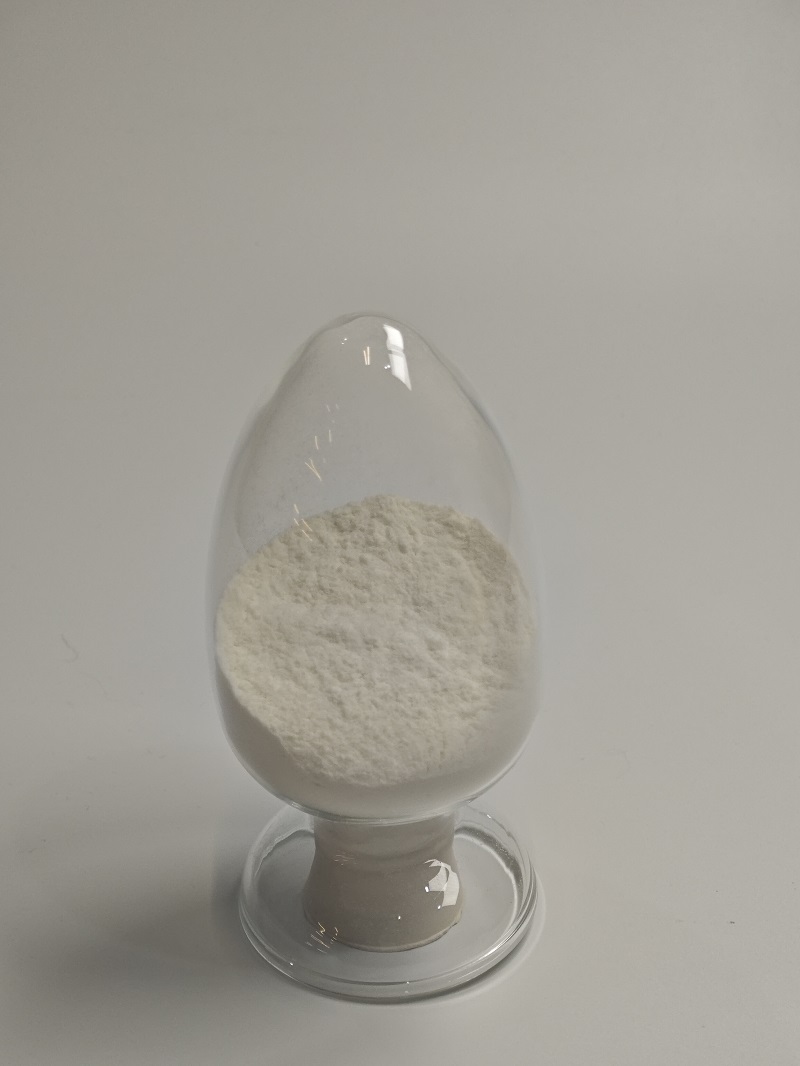
Ensifentrine
A novel and the first inhaled dual inhibitor of PDE3 (Phosphodiesterase 3) and PDE4 (Phosphodiesterase 4), with anti-inflammatory activity and bronchodilatory effect. Inhibition of PDE3 can induce smooth muscle relaxation by regulating cyclic guanosine monophosphate (cGMP) levels.
Overview
Ensifentrine is a novel and the first inhaled dual inhibitor of PDE3 (Phosphodiesterase 3) and PDE4 (Phosphodiesterase 4), with anti-inflammatory activity and bronchodilatory effect. Inhibition of PDE3 can induce smooth muscle relaxation by regulating cyclic guanosine monophosphate (cGMP) levels.
Synonyms: RPL-554; VMX-554; VRP-554; Ohtuvayre; 2-(9,10-DIMETHOXY-4-OXO-2-(2,4,6-TRIMETHYLPHENYL)IMINO-6,7-DIHYDROPYRIMIDO(6,1-A)ISOQUINOLIN-3-YL)ETHYLUREA; Ensifentrine; N-(2-((2E)-9,10-DIMETOXI-4-OXO-2-((2,4,6-TRIMETILFENIL)IMINO)-6,7-DIHIDRO-2H-PIRIMIDO(6,1-A)ISOQUINOLEIN-3(4H)-IL)ETIL)UREA; UREA, N-(2-(6,7-DIHYDRO-9,10-DIMETHOXY-4-OXO-2-((2,4,6-TRIMETHYLPHENYL)IMINO)-2H-PYRIMIDO(6,1-A)ISOQUINOLIN-3(4H)-YL)ETHYL)
Product Categories: Pharmaceutical Ingredient (API); Pharmaceutical Raw Materials
Mol File: 1884461-72-6.mol
Physicochemical Properties
Storage temp: -20°C
Solubility: DMSO: 25 mg/mL (52.35 mM; ultrasound required)
Form: Solid
Color: Light Yellow to Yellowish Green
MSDS Information
Experimental Data
1. Cell Experiment
Solubility in DMSO: 25 mg/mL (52.35 mM; ultrasonic treatment required. Hygroscopic DMSO significantly affects the solubility of the product. Please use freshly opened DMSO.)
Preparing Stock Solutions:
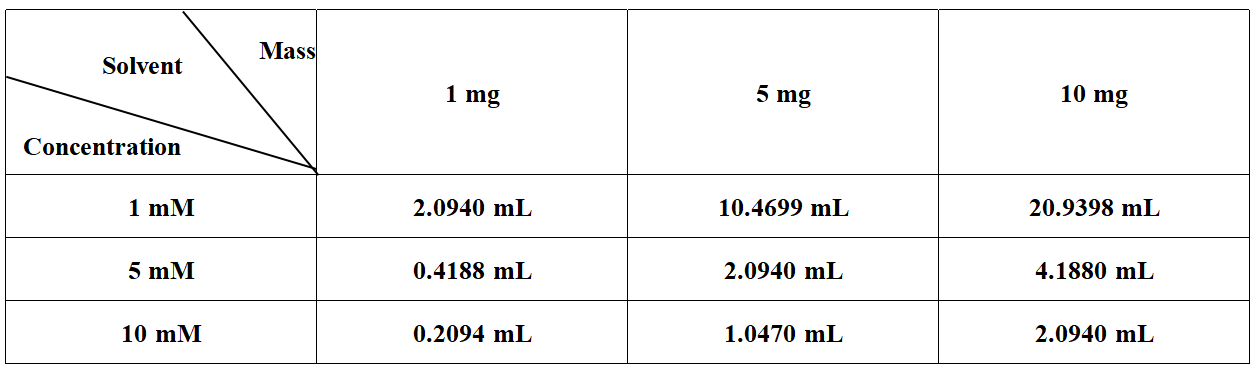
Please select the appropriate solvent for preparing stock solutions based on the product's solubility in different solvents. Once prepared, aliquot the stock solution and store it to avoid product failure caused by repeated freeze-thaw cycles.
Storage conditions and shelf life: -80°C, 6 months; -20°C, 1 month. When stored at -80°C, use within 6 months; when stored at -20°C, use within 1 month.
2.Animal Experiment
Please select an appropriate dissolution protocol based on your experimental animals and route of administration.
The following protocols require first preparing a clear stock solution using the In Vitro method, followed by sequential addition of co-solvents:
— To ensure experimental reliability, the clear stock solution may be stored appropriately according to storage conditions; for in vivo working solutions, it is recommended to prepare them freshly on the day of use.
The percentages indicated before each solvent refer to its volume ratio in the final solution. If precipitation or crystallization occurs during preparation, dissolution can be assisted by heating and/or sonication.
Protocol 1
Please add each solvent in sequence: 10% DMSO, 40% PEG300, 5% Tween-80, 45% Saline.
Solubility: ≥ 1.25 mg/mL (2.62 mM); Clear solution.
This protocol yields a clear solution of ≥ 1.25 mg/mL (saturation unknown).
For example, to prepare 1 mL of working solution: Add 100 μL of a 12.5 mg/mL clear DMSO stock solution to 400 μL of PEG300 and mix well. Then add 50 μL of Tween-80 to the mixture and mix thoroughly. Finally, add 450 μL of saline to adjust the volume to 1 mL.
Preparation of saline: Dissolve 0.9 g of sodium chloride in ddH₂O and bring the volume to 100 mL to obtain a clear and transparent saline solution.
Protocol 2
Please add each solvent in sequence: 10% DMSO, 90% (20% SBE-β-CD in Saline).
Solubility: 1.25 mg/mL (2.62 mM); Suspension; ultrasonic treatment is required.
This protocol yields a uniform suspension of 1.25 mg/mL, which can be used for oral administration and intraperitoneal injection.
For example, to prepare 1 mL of working solution: Add 100 μL of a 12.5 mg/mL clear DMSO stock solution to 900 μL of 20% SBE-β-CD in saline and mix well.
To prepare 20% SBE-β-CD in saline: Dissolve 2 g of SBE-β-CD (sulfobutylether β-cyclodextrin) powder in saline and bring the volume to 10 mL. Mix until fully dissolved to obtain a clear and transparent solution.
Pharmacodynamics
Ensifentrine causes bronchodilation in chronic obstructive pulmonary disease (COPD) and asthma. Ensifentrine was shown to mediate anti-inflammatory effects by reducing the levels of proinflammatory cytokines such as granulocyte-macrophage colony-stimulating factor (GM-CSF) in cystic fibrosis bronchial epithelial cells.
In vitro, ensifentrine activates the CFTR-mediated chloride ion secretion in bronchial epithelial cells, increasing ciliary beat frequency and potentially enhancing mucociliary clearance. In guinea pig models, ensifentrine demonstrated bronchoprotective properties against airway constriction caused by spasmogens and antigens: It caused dose-dependent relaxation of the airways.
Mechanism Of Action
COPD is characterized by progressive airflow obstruction and chronic inflammation of the respiratory tract. Because PDE3 and PDE4 are expressed in airway smooth muscle, inflammatory cells, and bronchial epithelial cells to drive inflammation and bronchial muscle tone, these two PDE isoforms have been identified as therapeutic targets in the treatment of COPD. PDE3 primarily hydrolyzes the second-messenger molecule cyclic adenosine monophosphate (cAMP) in airway smooth muscle, mediating muscle tone.PDE3 can also hydrolyze cyclic guanosine monophosphate (cGMP). PDE4 regulates cAMP only and is involved in inflammatory cell activation and migration, as well as Cystic Fibrosis Transmembrane Conductance Regulator (CFTR) stimulation in bronchial epithelial cells. Ensifentrine is a drug that selectively inhibits the PDE3 and PDE4 enzymes. Dual inhibition of PDE3 and PDE4 results in the accumulation of intracellular levels of cAMP and/or cGMP, causing a synergistic effect in contracting airway smooth muscle and suppressing inflammatory response.
Similar Products
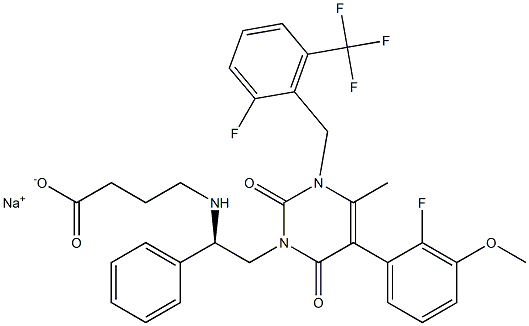
Elagolix Sodium
Therapy
: Women's health
Target
: GnRHR
CAS
: 832720-36-2
MF
: C32H29F5N3O5.Na
MW
: 653.572

trans-Clomiphene Citrate
Therapy
: Women's health
Target
: Estrogen Receptor/ERR
CAS
: 7599-79-3
MF
: C32H36ClNO8
MW
: 598.08314
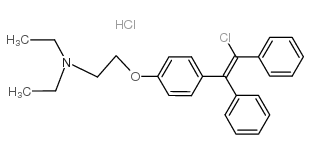
CIS-CLOMIPHENE HCL
Therapy
: Genitourinary
Target
: ERs
CAS
: 15690-55-8
MF
: C26H29Cl2NO
MW
: 442.421