
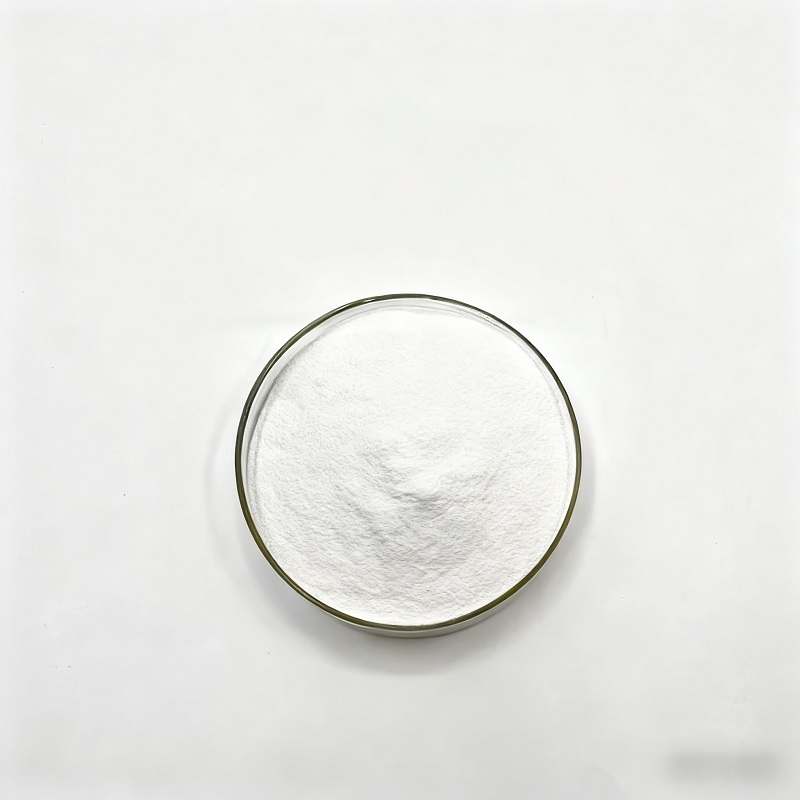
Vadadustat
A hypoxia-inducible factor prolyl hydroxylase inhibitor (HIF-PHI); used to treat anemia caused by chronic kidney disease.
概况
Vadadustat is an effective oral hypoxia-inducible factor prolyl hydroxylase inhibitor(HIF-PHI), which has the effects of regulating endogenous erythropoietin levels and improving iron metabolism. Vadadustat can be used in the research of chronic kidney disease (CKD)-related anemia, the pathophysiological mechanism of renal anemia and anemia-related cardiovascular risks.
Synonyms: MT-6548; AKB-6548; PG-1016548; I60W9520VV (UNII code); B-506; Vafseo; Vadadustatum; Glycine, N-((5-(3-chlorophenyl)-3-hydroxy-2-pyridinyl)carbonyl)-; N-(5-(3-Chlorophenyl)-3-hydroxypyridine-2-carbonyl)glycine; CS-2486; Valdesta
Product Categories: Heterocyclic compounds; Hydrazines & Hydrazides; Pharmaceuticals; Intermediates & Fine Chemicals; API
Mol File: 1000025-07-9.mol
物化性质
Melting point: 172-174℃
Storage temp: Hygroscopic, -20°C Freezer, Under inert atmosphere
Solubility: DMSO (Slightly), Methanol (Slightly)
Form: Solid
Color: Pale Beige to Light Beige
Stability: Hygroscopic
MSDS信息
实验数据
1. Cell Experiment
Solubility in DMSO: 100 mg/mL (326.05 mM; sonication-assisted dissolution; hygroscopic DMSO significantly affects product solubility, so use freshly opened DMSO.)
Preparing Stock Solutions:
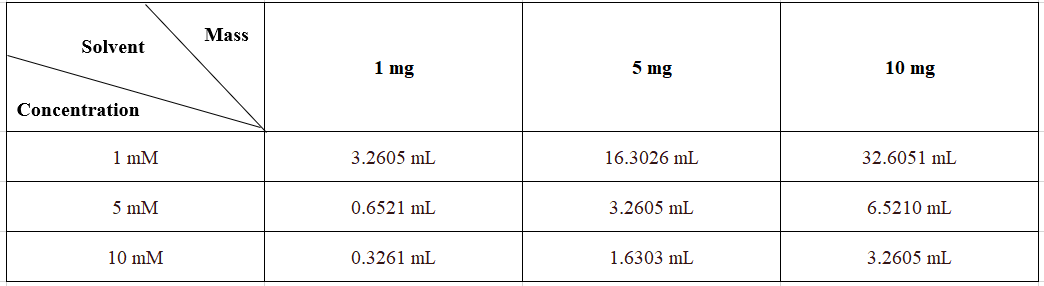
Please prepare the stock solution in the appropriate solvent based on the product's solubility in different solvents. Once prepared, aliquot and store to avoid freeze-thaw cycles that may cause product loss.
Stock solution storage and expiration date: -80°C, 6 months; -20°C, 1 month. When stored at -80°C, use within 6 months; when stored at -20°C, use within 1 month.
2. Animal Experiment
Please select the appropriate dissolution method based on your experimental animal and administration method.
For the following dissolution methods, first prepare a clear stock solution in vitro, then add cosolvents in sequence:
To ensure reliable experimental results, the clear stock solution can be stored appropriately according to storage conditions. For in vivo experiments, it is recommended that you prepare the working solution immediately and use it the same day.
The percentage displayed before the solvent below refers to the volume percentage of the solvent in the final solution. If precipitation or precipitation occurs during the preparation process, heating and/or sonication can be used to aid dissolution.
Protocol 1
Add each solvent in order: 10% DMSO, 40% PEG300, 5% Tween-80, 45% Saline.
Solubility: ≥ 2.5 mg/mL (8.15 mM); Clear Solution
This protocol produces a clear solution with a concentration of ≥ 2.5 mg/mL (saturation unknown).
For a 1 mL working solution, add 100 μL of the 25.0 mg/mL clear DMSO stock solution to 400 μL of PEG300 and mix thoroughly. Add 50 μL of Tween-80 to the solution and mix thoroughly. Then, add 450 μL of normal saline to bring the volume to 1 mL.
To prepare normal saline: Dissolve 0.9 g of sodium chloride in ddH₂O and dilute to 100 mL. This will yield a clear, transparent normal saline solution.
Protocol 2
Add each solvent in sequence: 10% DMSO, 90% (20% SBE-β-CD in saline).
Solubility: ≥ 2.5 mg/mL (8.15 mM); Clear Solution
This option yields a clear solution of ≥ 2.5 mg/mL (saturation unknown).
For a 1 mL working solution, add 100 μL of the 25.0 mg/mL clear DMSO stock solution to 900 μL of a 20% SBE-β-CD solution in saline and mix thoroughly.
Add 2 g of SBE-β-CD (sulfobutyl ether β-cyclodextrin) powder to 10 mL of saline and dissolve completely until clear.
Protocol 3
Please add each solvent in order: 10% DMSO, 90% corn oil.
Solubility: ≥ 2.5 mg/mL (8.15 mM); Clear solution
This protocol produces a clear solution of ≥ 2.5 mg/mL (saturation unknown). This protocol should be used for animal experiments with experimental durations exceeding two weeks.
For a 1 mL working solution, add 100 μL of the 25.0 mg/mL clear DMSO stock solution to 900 μL of corn oil and mix thoroughly.
Pharmacodynamics
The use of vadadustat was compared to darbepoetin alfa for the treatment of anemia in adult patients with dialysis-dependent chronic kidney disease. Vadadustat was non-inferior to darbepoetin alfa and met the primary hemoglobin level endpoint. In healthy subjects given 600 mg to 1200 mg of vadadustat, the use of this drug was not associated with clinically significant QTc prolongation. Compared to darbepoetin alfa, patients with dialysis-dependent chronic kidney disease treated with vadadustat have similar risks for death, myocardial infarction and stroke. The use of vadadustat may also lead to the development of thromboembolic events, hepatic impairment, hepatotoxicity, convulsions, as well as an increase in blood pressure.
Mechanism Of Action
Hypoxia-inducible factors (HIFs) are transcription factors responsible for cellular survival under hypoxic conditions. They regulate a number of processes including angiogenesis, cell growth and differentiation, various metabolic processes, and erythropoiesis. Under normoxic conditions, HIFs are degraded via hydroxylation by prolyl-hydroxylase dioxygenases. Vadadustat is an inhibitor of HIF-prolyl-hydroxylases (HIF-PHI), that facilitates increased HIF activity in the absence of hypoxic conditions. The increased levels of HIF prompted by vadadustat stimulate endogenous erythropoietin production, increasing iron mobilization and contributing to the gradual rise of hemoglobin levels and the correction of iron metabolism. In patients with anemia of chronic kidney disease, in whom normal erythropoiesis is dysfunctional, this leads to the correction of anemia.
相似产品
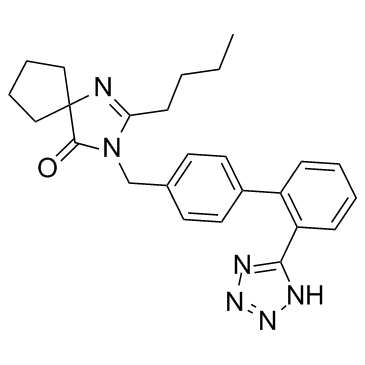
Irbesartan
治疗领域
: Cardiometabolic diseases
作用靶点
: AT1
CAS
: 138402-11-6
分子式
: C25H28N6O
分子量
: 428.53
Metformin Hydrochloride
治疗领域
: Cardiometabolic diseases
作用靶点
: PRKAB1
CAS
: 1115-70-4
分子式
: C4H12ClN5
分子量
: 165.62
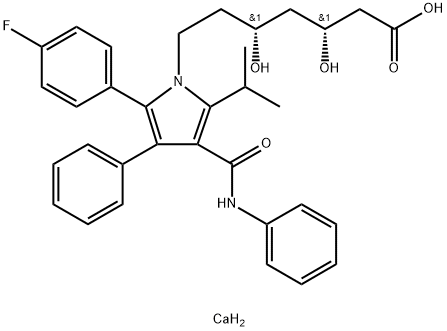
Atorvastatin Calcium
治疗领域
: Cardiometabolic diseases
作用靶点
: HMGCR
CAS
: 134523-03-8
分子式
: C33H37CaFN2O5
分子量
: 600.74
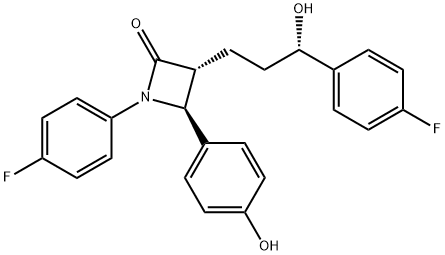
Ezetimibe
治疗领域
: Cardiometabolic diseases
作用靶点
: NPC1L1
CAS
: 163222-33-1
分子式
: C24H21F2NO3
分子量
: 409.43