
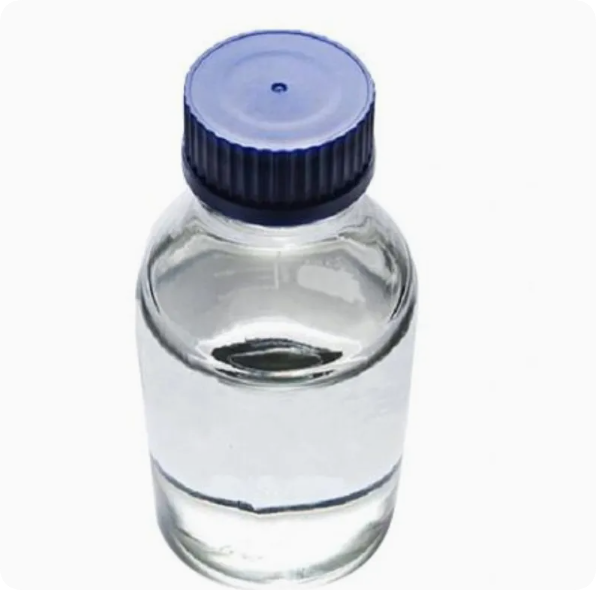
1-(PERFLUOROHEXYL)OCTANE
A semifluorinated alkane that can reduce meibomian gland dysfunction and tear film instability in evaporative dry eye disease.
概况
Perfluorohexyl octane is a semi-fluorinated alkane, containing six fully fluorinated carbon atoms and eight hydrogenated carbon atoms. Perfluorohexyl octane forms a monolayer at the air-liquid interface of the tear film, expected to reduce evaporation, and can be used to treat dry eye syndrome.
Synonyms: NOV-03; SHR8058; SHR-8058; NovaTears; Miebo; Heng Qin; Perfluorohexyloctane ophthalmic solution; Perfluorohexyloctane eye drops; Perfluorohexyloctane; F6H8; NOV03; Tetradecane, 1,1,1,2,2,3,3,4,4,5,5,6,6-tridecafluoro-
EINECS: 432-570-5
Product Categories: Active pharmaceutical ingredient; ACE inhibitors and receptor blockers; Hydrocarbons, Fluorinated; Hydrocarbons, Halogenated; Ophthalmic Solutions; Ophthalmics; Ophthalmological and Otological Preparations; Ophthalmologicals; Semifluorinated Alkane
Mol File: 133331-77-8.mol
物化性质
Melting point: 4.96°C
Boiling point: 340°C
Density: 1.331g/cm3
Storage temp: 2-8℃
Solubility: Ethanol: Sparingly soluble: 1-10 mg/mL
Form: Liquid
Color: Colorless to Light Yellow
Water Solubility: 0.992ng/L at 25℃
Stability: It exhibits high stability against oxygen, heat, and various chemicals, and is not easily decomposed.
MSDS信息
实验数据
1.Cell Experiment
Solubility in DMSO: 100 mg/mL (231.34 mM; assisted by ultrasound; the hygroscopic nature of DMSO significantly affects the solubility of the product, please use freshly opened DMSO)
Preparing Stock Solutions:
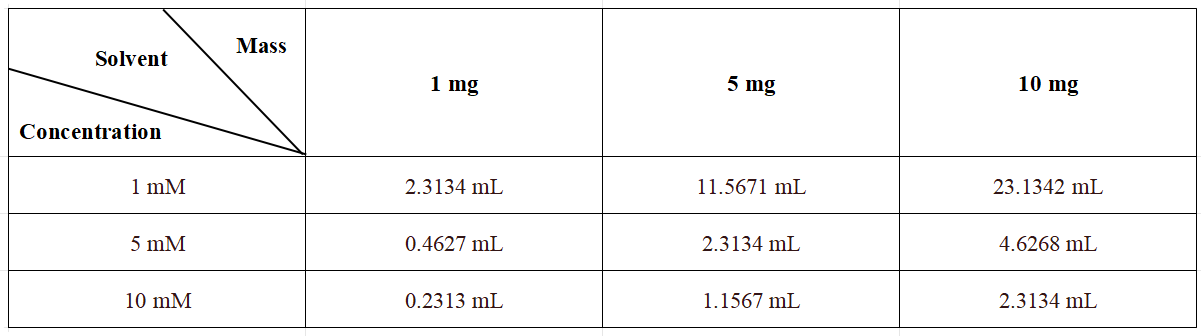
Please choose an appropriate solvent to prepare the stock solution based on the product's solubility in different solvents; once the solution is prepared, aliquot and store it to avoid product degradation caused by repeated freeze-thaw cycles. Storage conditions and duration for the stock solution: -80°C for 6 months; -20°C for 1 month. When stored at -80°C, use within 6 months; when stored at -20°C, use within 1 month.
2.Animal Experiment
Please choose an appropriate dissolution plan based on your experimental animals and administration method.
Please prepare a clear stock solution according to the In Vitro method for all the following dissolution schemes, and then sequentially add the solubilizers:
— To ensure the reliability of the experimental results, the clear stock solution can be appropriately stored according to storage conditions; for in vivo experiments, it is recommended to prepare the working solution fresh on the day of use;The percentages shown before the following solvents refer to the volume ratio of that solvent in your final prepared solution; if precipitation or crystallization occurs during preparation, solubilization can be assisted by heating and/or ultrasonication.
Protocol 1
Add each solvent in order: 10% DMSO, 40% PEG300, 5% Tween-80, 45% Saline.
Solubility: ≥ 2.5 mg/mL (5.78 mM); Clear Solution
This protocol produces a clear solution with a concentration of ≥ 2.5 mg/mL (saturation unknown).
For a 1 mL working solution, add 100 μL of the 25.0 mg/mL clear DMSO stock solution to 400 μL of PEG300 and mix thoroughly. Add 50 μL of Tween-80 to the solution and mix thoroughly. Then, add 450 μL of normal saline to bring the volume to 1 mL.
To prepare normal saline, dissolve 0.9 g of sodium chloride in ddH₂O and dilute to 100 mL. This will yield a clear, transparent normal saline solution.
Protocol 2
Add each solvent in sequence: 10% DMSO 90% (20% SBE-β-CD in saline)
Solubility: ≥ 2.5 mg/mL (5.78 mM); Clear Solution
This protocol yields a clear solution of ≥ 2.5 mg/mL (saturation unknown).
For a 1 mL working solution, add 100 μL of the 25.0 mg/mL clear DMSO stock solution to 900 μL of a 20% SBE-β-CD solution in saline and mix thoroughly.
Dissolve 2 g of SBE-β-CD (sulfobutyl ether β-cyclodextrin) powder in 10 mL of saline until clear and transparent.
Protocol 3
Please add each solvent in the following order: 10% DMSO, 90% corn oil.
Solubility: ≥ 2.5 mg/mL (5.78 mM); Clear solution
This protocol produces a clear solution of ≥ 2.5 mg/mL (saturation unknown). This protocol should be used for animal experiments with experimental durations exceeding two weeks.
For a 1 mL working solution, add 100 μL of the 25.0 mg/mL clear DMSO stock solution to 900 μL of corn oil and mix thoroughly.
Pharmacodynamics
Perfluorohexyloctane is administered ophthalmically to alleviate symptoms of dry eye disease, increase tear film breakup time, and increase lipid layer thickness. Having low surface and interface tensions, perfluorohexyloctane spreads rapidly across the ocular surface. It is reported to cause minimal visual disturbances, attributed to its refractive index being similar to that of water.
Mechanism Of Action
Perfluorohexyloctane mediates its actions in the lipid layer and meibomian glands. While the exact mechanism of action is not fully understood, perfluorohexyloctane is believed to interact with the air-liquid interface of the tear film and form a monolayer, preventing the evaporation of the aqueous phase of the tears.
相似产品
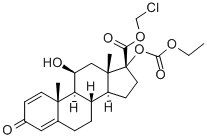
Loteprednol
治疗领域
: Ophthalmology
作用靶点
: Glucocorticoid Receptor
CAS
: 129260-79-3
分子式
: C21H27ClO5
分子量
: 394.89
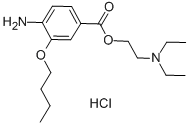
Benoxinate HCl
治疗领域
: Ophthalmology
作用靶点
: SCNA
CAS
: 5987-82-6
分子式
: C17H29ClN2O3
分子量
: 344.88
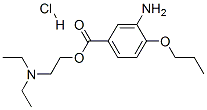
Proparacaine HCl
治疗领域
: Ophthalmology
作用靶点
: SCNA
CAS
: 5875-06-9
分子式
: C16H27ClN2O3
分子量
: 330.85
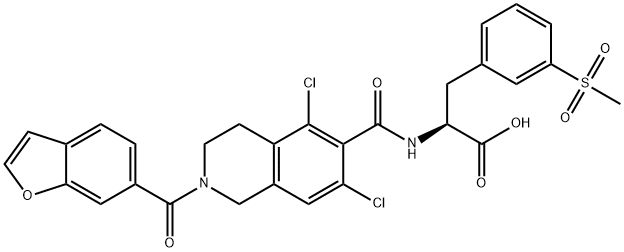
Lifitegrast
治疗领域
: Ophthalmology
作用靶点
: ITGAL&ITGB2
CAS
: 1025967-78-5
分子式
: C29H24Cl2N2O7S
分子量
: 615.48