
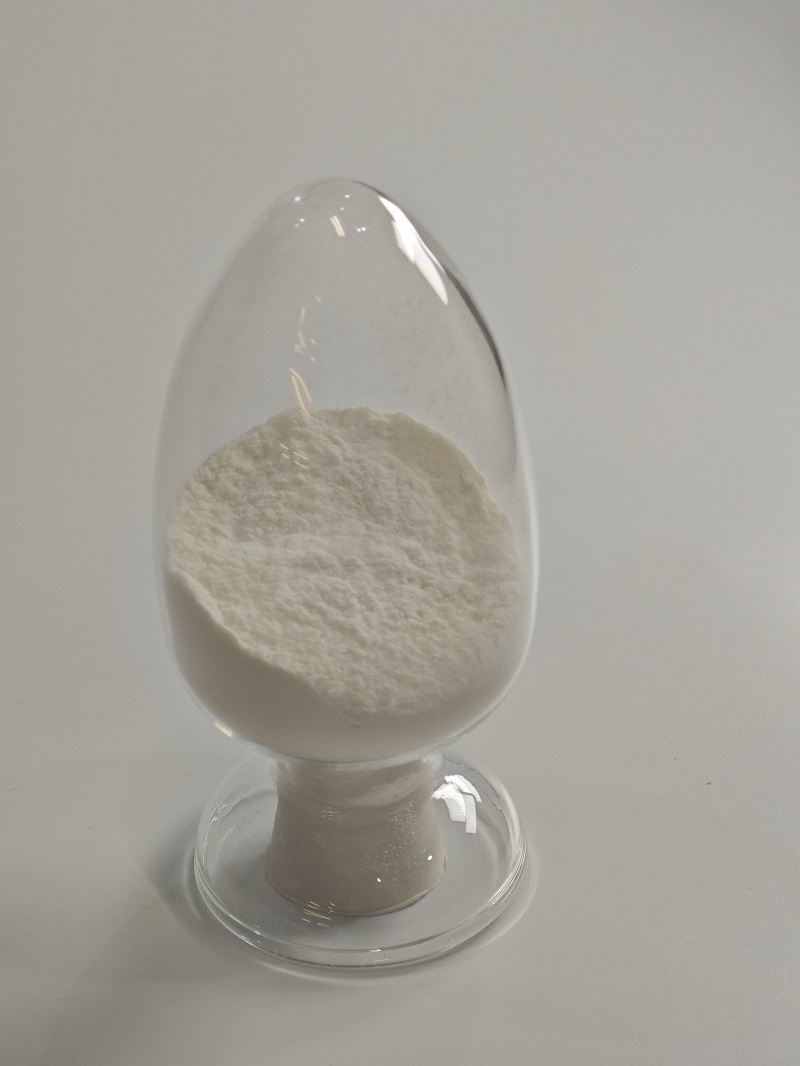
Inavolisib
A small molecule PIK3CA inhibitor used as part of a three-drug regimen for PIK3CA-mutated, HR-positive, HER2-negative advanced breast cancers.
Overview
Inavolisib is a potent, orally active, and selective PI3Kα inhibitor (IC50=0.038 nM). Inavolisib exerts its activity by binding to the ATP binding site of PI3K, thereby inhibiting the phosphorylation of PIP2 to PIP3. Inavolisib is more selective for mutant versus wild-type PI3Kα. Inavolisib can be used for the study of breast cancer.
Synonyms: RG-6114; GDC-0077; RO-7113755; Itovebi; (2S)-2-((2-((4S)-4-(difluoromethyl)-2-oxo-3-oxazolidinyl)-5,6-dihydroimidazo(1,2-D)(1,4)benzoxazepin-9-yl)amino)propanamide; propanamide, 2-((2-((4S)-4-(difluoromethyl)-2-oxo-3-oxazolidinyl)-5,6-dihydroimidazo(1,2-D)(1,4)benzoxazepin-9-yl)amino)-, (2S)-
Product Categories: BCRP/ABCG2 Substrates; Cytochrome P-450 CYP2B6 Inducers; Cytochrome P-450 CYP2B6 Inducers (strength unknown); Cytochrome P-450 Enzyme Inducers; Enzyme Inhibitors; Kinase Inhibitor; Phosphatidylinositol-3-kinase (Pi3K) inhibitors; Phosphoinositide-3 Kinase Inhibitors
Mol File: 2060571-02-8.mol
Physicochemical Properties
Boiling point: 698.0±65.0°C
Storage temp: -20℃
Solubility: DMSO: 110.0 (maximum concentration mg/mL); 245.47 (maximum concentration mM)
Form: Solid
Color: White to Yellow
MSDS Information
Experimental Data
1. Cell Experiment
DMSO: 100 mg/mL (245.48 mM; Need ultrasonic; Hygroscopic DMSO has a significant impact on the solubility of product, please use newly opened DMSO)
Preparing Stock Solutions:
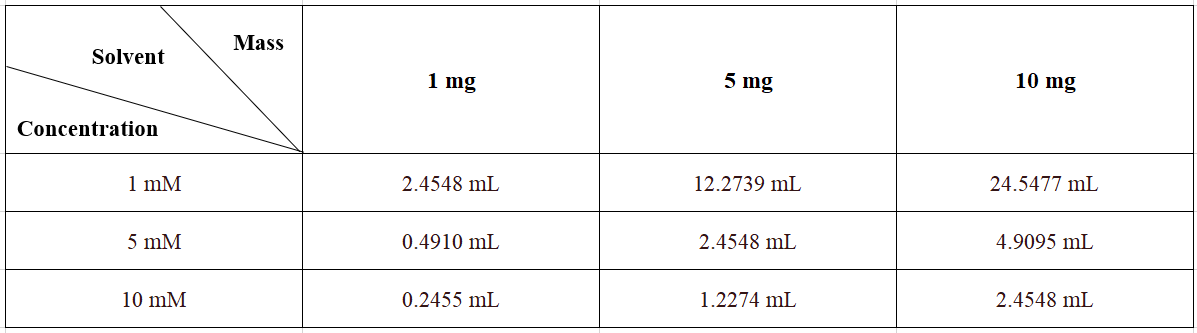
Please refer to the solubility information to select the appropriate solvent. Once prepared, please aliquot and store the solution to prevent product inactivation from repeated freeze-thaw cycles.
Storage method and period of stock solution: -80°C, 6 months; -20°C, 1 month. When stored at -80°C, please use it within 6 months. When stored at -20°C, please use it within 1 month.
2. Animal Experiment
Select the appropriate dissolution method based on your experimental animal and administration route.
For the following dissolution methods, please ensure to first prepare a clear stock solution using an In Vitro approach and then sequentially add co-solvents:
To ensure reliable experimental results, the clarified stock solution can be appropriately stored based on storage conditions. As for the working solution for in vivo experiments, it is recommended to prepare freshly and use it on the same day.
The percentages shown for the solvents indicate their volumetric ratio in the final prepared solution. If precipitation or phase separation occurs during preparation, heat and/or sonication can be used to aid dissolution.
Protocol 1
Add each solvent one by one: 5% DMSO, 40% PEG300, 5% Tween-80, 50% Saline
Solubility: ≥ 2.75 mg/mL (6.75 mM); Clear solution
Protocol 2
Add each solvent one by one: 5% DMSO, 95% (20% SBE-β-CD in Saline)
Solubility: ≥ 2.75 mg/mL (6.75 mM); Clear solution
Protocol 3
Add each solvent one by one: 10% DMSO, 40% PEG300, 5% Tween-80, 45% Saline
Solubility: ≥ 2.08 mg/mL (5.11 mM); Clear solution
This protocol yields a clear solution of ≥ 2.08 mg/mL (saturation unknown).
Taking 1 mL working solution as an example, add 100 μL DMSO stock solution (20.8 mg/mL) to 400 μL PEG300, and mix evenly; then add 50 μL Tween-80 and mix evenly; then add 450 μL Saline to adjust the volume to 1 mL.
Preparation of Saline: Dissolve 0.9 g sodium chloride in ddH₂O and dilute to 100 mL to obtain a clear Saline solution.
Protocol 4
Add each solvent one by one: 10% DMSO, 90% (20% SBE-β-CD in Saline)
Solubility: ≥ 2.08 mg/mL (5.11 mM); Clear solution
This protocol yields a clear solution of ≥ 2.08 mg/mL (saturation unknown).
Taking 1 mL working solution as an example, add 100 μL DMSO stock solution (20.8 mg/mL) to 900 μL 20% SBE-β-CD in Saline, and mix evenly.
Preparation of 20% SBE-β-CD in Saline (4°C, storage for one week): 2 g SBE-β-CD powder is dissolved in 10 mL Saline, completely dissolve until clear.
Protocol 5
Add each solvent one by one: 1% DMSO, 99% Saline
Solubility: ≥ 0.55 mg/mL (1.35 mM); Clear solution
Pharmacodynamics
The exposure-response relationship in regards to inavolisib efficacy has not been characterized. Higher systemic exposure of inavolisib was associated with higher incidence of Grade ≥2 anemia, Grade ≥2 hyperglycemia, and inavolisib dosage modifications due to adverse reactions.
Mechanism Of Action
Inavolisib is a mutant-selective PI3Kα inhibitor that targets the p110α catalytic subunit of PI3Kα, specifically in its mutated form. PI3Kα is a critical component of the PI3K pathway, which is activated by receptor tyrosine kinases (RTKs) at the plasma membrane. This pathway regulates cell growth, survival, and metabolism. In non-mutant settings, inhibition of PI3Kα by standard PI3K inhibitors leads to initial suppression of the pathway. However, feedback mechanisms often upregulate RTK expression, leading to sustained PI3K signaling despite the inhibition. In contrast, inavolisib selectively binds to the mutant p110α/p85β complex, triggering proteasome-mediated degradation of the mutant p110α subunit. This degradation disrupts downstream signaling and prevents feedback reactivation of the PI3K pathway. By degrading mutant p110α, inavolisib achieves sustained inhibition of PI3K signaling, particularly in tumors driven by activating mutations in PI3Kα.
Similar Products

Amifostine
Therapy
: Oncology
Target
: Alkaline phosphatase
CAS
: 20537-88-6
MF
: C5H15N2O3PS
MW
: 214.22

Carboplatin
Therapy
: Oncology
Target
: DNA
CAS
: 41575-94-4
MF
: C6H12N2O4Pt
MW
: 371.25
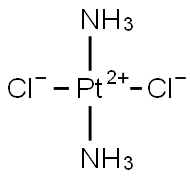
Cisplatin
Therapy
: Oncology
Target
: DNA
CAS
: 15663-27-1
MF
: Cl2H6N2Pt
MW
: 300.04
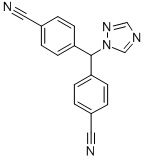
Letrozole
Therapy
: Oncology
Target
: ERs;Aromatase
CAS
: 112809-51-5
MF
: C17H11N5
MW
: 285.3