
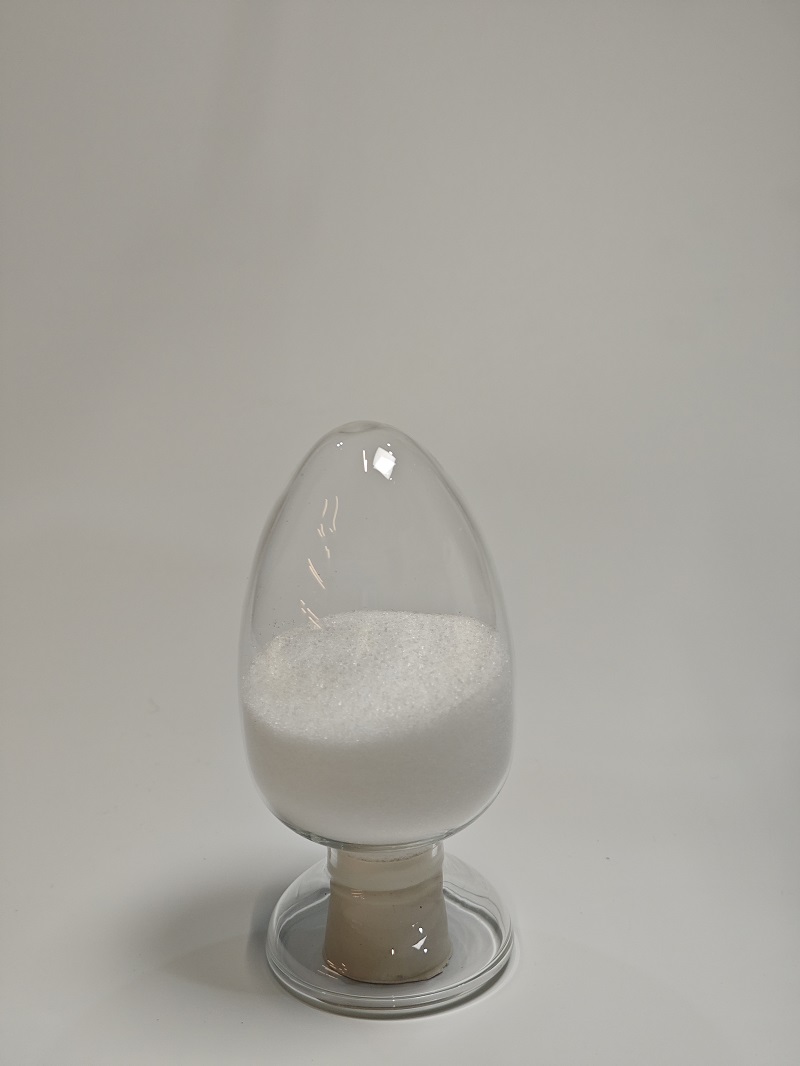
Aprocitentan
A dual endothelin receptor antagonist (which can antagonize both endothelin-1 receptors and endothelin-3 receptors). It is mainly used for the treatment of resistant hypertension (for patients whose blood pressure is still not effectively controlled after using multiple conventional antihypertensive drugs).
Overview
Aprocitentan is a potent oral non-steroidal endothelin receptor (ET receptor) antagonist, which exhibits a dual antagonistic effect on endothelin-1 (ET₁) as well as ETₐ and ETᵦ receptors. Aprocitentan can be used in the research of refractory hypertension, endothelin-related cardiovascular diseases and specific vascular abnormality-related diseases.
Synonyms: N-DespropylMacitentan; Aprocitentan; ACT-132577; APROCITENTAN; ACT-132577; ACT132577; ACT132577; DESPROPYLMACITENTAN; DespropylMacitentan; MacitentanN-DespropylImpurity; JNJ-2820; AC-080; TRYVIO; JERAYGO; Aprocitentan - Idorsia Pharmaceuticals
Product Categories: APIS; API
Mol File: 1103522-45-7.mol
Physicochemical Properties
Melting point: 139-141°C
Boiling point: 705.0±70.0°C(Predicted)
Storage temp: -20°C Freezer
Solubility: Chloroform (Slightly, Heated), Methanol (Slightly, Heated)
Form: Solid
Color: White to Off-White
MSDS Information
Experimental Data
1. Cell Experiment
Solubility in DMSO: 25 mg/mL (45.77 mM; Ultrasonic Assisted Solubility (<60°C); Hygroscopic DMSO has a significant effect on the solubility of the product, please use freshly opened DMSO)
Preparing Stock Solutions:
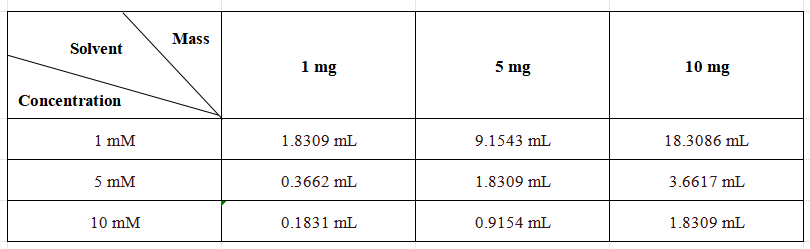
Please choose the appropriate solvent to prepare the stock solution according to the solubility of the product in different solvents; once the solution is prepared, please store it in separate packages to avoid product failure caused by repeated freezing and thawing.Storage method and period of the stock solution: -80°C, 2 years; -20°C, 1 year.Use within 2 years when stored at -80°C, and within 1 year when stored at -20°C.
2. Animal Control
Choose the appropriate dissolution protocol based on your experimental animal and mode of administration.
For the following dissolution schemes, please prepare the clarified stock solution in vitro first, and then add the co-solvent in turn:
- In order to ensure the reliability of the experimental results, the clarified stock solution can be properly stored according to the storage conditions; It is recommended that you use the working solution for in vivo experiments and use it on the same day;The percentage shown before the following solvent refers to the proportion of the volume of the solvent in your final solution; If there is precipitation or precipitation during the preparation process, it can be dissolved by heating and/or ultrasound.
Option 1
Add each solvent in order: 10% DMSO, 40% PEG300 , 5% Tween-80, 45% Saline.
Solubility:≥ 2.5 mg/mL (4.58 mM); Clarifying solution.
A clarified solution of ≥ 2.5 mg/mL (saturation unknown) is obtained for this protocol.
For example, take 1 mL of working solution and add 100 μL of 25.0 mg/mL of clarified DMSO stock solution to 400 μL of PEG300 and mix well. Add 50 μL of Tween-80 to the above system and mix well. Then continue to add 450 μL of normal saline to 1 mL.
Preparation of normal saline: 0.9 g of sodium chloride dissolved in ddH₂O and fixed to 100 mL can obtain a clear and transparent normal saline solution.
Option 2
add each solvent in order:10% DMSO,90% Corn Oil
Solubility: ≥ 2.5 mg/mL (4.58 mM); Clarifying solution.
A clarified solution of ≥ 2.5 mg/mL (saturation unknown) is available for this protocol, as appropriate for animal experiments with experimental cycles of more than half a month.
For example, 100 μL of 25.0 mg/mL of clarified DMSO stock solution is added to 900 μL of corn oil and mixed well.
Pharmacodynamics
Aprocitentan exerts its pharmacologic effects by antagonizing receptors, ETA and ETB, which play a role in the pathogenesis of hypertension.In the PRECISION trial, aprocitentan demonstrated superiority to placebo in reducing both sitting systolic and diastolic blood pressures, with a mean reduction in sitting trough blood pressure of approximately 4 mmHg greater than placebo.Most of the antihypertensive effect of aprocitentan occurs within the first two weeks of treatment.
Based on data from animal reproduction studies with other endothelin receptor antagonists, aprocitentan can cause fetal harm when administered during pregnancy. Prior to initiating treatment with aprocitentan, pregnancy should be excluded and acceptable contraceptive methods employed. Patients should monitor for pregnancy monthly and use effective contraception during treatment and for one month after discontinuation. Because of the significant risk of embryo-fetal toxicity, aprocitentan is only available through a restricted program called the Tryvio REMS.
Mechanism Of Action
Endothelin-1 (ET-1) is the predominant endothelin isoform in the human cardiovascular system. It is produced constitutively by vascular endothelial cells to maintain vascular tone and is found in a variety of other cells including vascular smooth muscle cells, cardiomyocytes, fibroblasts, macrophages, neurons, and epithelial cells in the lungs and kidneys.ET-1 acts on two receptors, ETA and ETB, located on vascular smooth muscle cells and endothelial cells which serve to regulate blood pressure by inducing vasoconstriction or vasodilation. ET-1 is an extremely potent vasoconstrictor that works primarily via interactions with the ETA receptor and, under pathologic conditions, further induces vasoconstriction via interactions with ETB2.The overexpression of both ET-1 and ET receptors has been shown in a variety of pathologies, including essential hypertension, pulmonary arterial hypertension, chronic kidney disease, and diabetes mellitus. Aprocitentan is a dual endothelin receptor antagonist that inhibits the binding of ET-1 to both ETA and ETB receptors.This inhibition mitigates the hypertensive effects of ET-1 overexpression, including endothelial dysfunction, vascular hypertrophy and remodeling, sympathetic activation, and increased aldosterone synthesis.
Similar Products
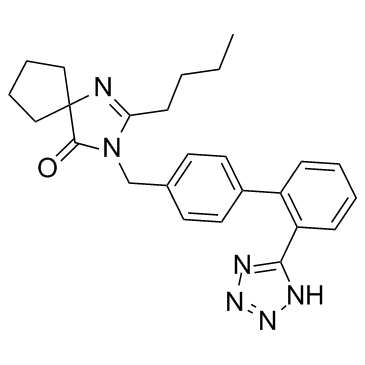
Irbesartan
Therapy
: Cardiometabolic diseases
Target
: AT1
CAS
: 138402-11-6
MF
: C25H28N6O
MW
: 428.53
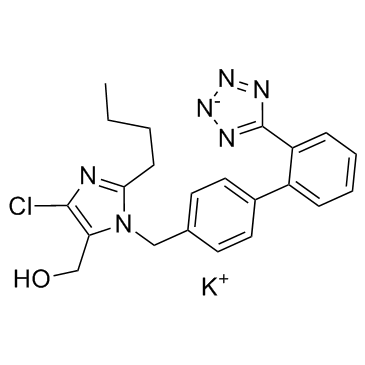
Losartan Potassium
Therapy
: Cardiometabolic diseases
Target
: AT1
CAS
: 124750-99-8
MF
: C22H23ClKN6O
MW
: 462.01
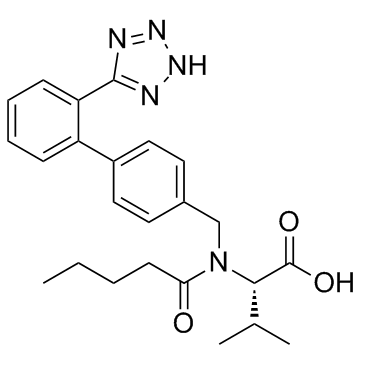
Valsartan
Therapy
: Cardiometabolic diseases
Target
: AT1
CAS
: 137862-53-4
MF
: C24H29N5O3
MW
: 435.52
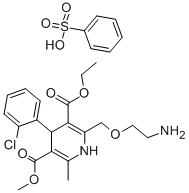
Amlodipine Besylate
Therapy
: Cardiometabolic diseases
Target
: VDCCs
CAS
: 111470-99-6
MF
: C26H31ClN2O8S
MW
: 567.05094