
Danicopan
A complement factor D inhibitor. It is mainly used for the treatment of paroxysmal nocturnal hemoglobinuria (PNH), especially in patients with an insufficient response to complement C5 inhibitors (such as eculizumab).
Overview
Danicopan is an effective oral complement factor D inhibitor that acts as a complement system modulator, exerting the effects of inhibiting excessive activation of the alternative complement pathway and regulating abnormal complement responses. Danicopan can be used in the research of Paroxysmal Nocturnal Hemoglobinuria (PNH), Atypical Hemolytic Uremic Syndrome (aHUS), C3 Glomerulopathy (C3G), and other disorders associated with excessive activation of the alternative complement pathway.
Synonyms: ACH-0144471; Danicopan; ACH-4471; Danicopan(ACH-4471); ACH4471, ComplementSystem, ACH4471, Danicopan, inhibit, Inhibitor; Danicopan(ACH-4471), S0803; ALXN-2040; ACH-CFDIS; Voydeya; VOYDEYA; 2-Pyrrolidinecarboxamide,1-[2-[3-acetyl-5-(2-methyl-5-pyrimidinyl)-1H-indazol-1-yl]acetyl]-N-(6-bromo-2-pyridinyl)-4-fluoro-,(2S,4R)-; (2S,4R)-1-(2-(3-ChemicalbookAcetyl-5-(2-methylpyrimidin-5-yl)-1H-indazol-1-yl)acetyl)-N-(6-bromopyridin-2-yl)-4-fluoropyrrolidine-2-carboxamide
Product Categories: Amines; BCRP/ABCG2 Inhibitors; Immunosuppressive Agents; Complement Factor D Inhibitor; Amino Acids
Mol File:1903768-17-1.mol
Physicochemical Properties
Boiling point: 841.7±65.0°C(Predicted)
Storage temp: -20°C
Solubility: DMSO: 175.0(Max Conc. mg/mL); 301.51(Max Conc. mM)
Form: Solid
Color: White to Off-white
MSDS Information
Experimental Data
1. Cell Experiment
Solubility in DMSO : 125 mg/mL (215.37 mM; ultrasonic co-solubilization; Hygroscopic DMSO has a significant effect on the solubility of the product, use freshly opened DMSO)
Preparing Stock Solutions:
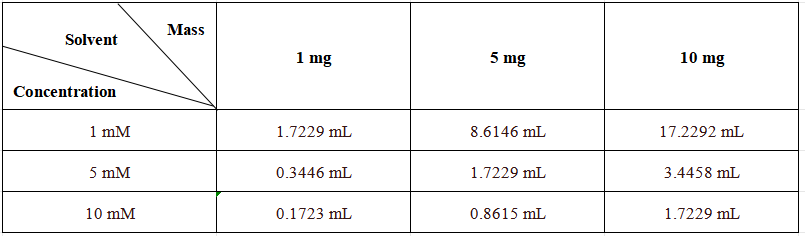
Please choose the appropriate solvent to prepare the stock solution according to the solubility of the product in different solvents; Once prepared into a solution, please store it in separate packages to avoid product failure caused by repeated freezing and thawing.Storage method and duration of stock solution: -80°C, 6 months; -20°C, 1 month。 Use within 6 months when stored at -80°C, and within 1 month when stored at -20°C.
2. Animal Control
Choose the appropriate dissolution protocol based on your experimental animal and mode of administration.
For the following dissolution schemes, please prepare the clarified stock solution according to the in vitro method, and then add the co-solvent in turn:
- In order to ensure the reliability of the experimental results, the clarified stock solution can be properly stored according to the storage conditions; It is recommended that you use the working solution for in vivo experiments and use it on the same day;The percentages shown before the following solvents are the proportion of the volume of that solvent in your final solution; If precipitation and precipitation occur during the preparation process, it can be dissolved by heating and/or ultrasound.
Option 1
Add each solvent in order: 10% DMSO , 40% PEG300 , 5% Tween-80, 45% Saline.
Solubility:≥ 2.08 mg/mL (3.58 mM); Clarifying solution.
A clarified solution of ≥ 2.08 mg/mL (saturation unknown) is obtained for this protocol.
For example, take 1 mL of working solution and add 100 μL of 20.8 mg/mL of clarified DMSO stock solution to 400 μL of PEG300 and mix well. Add 50 μL of Tween-80 to the above system and mix well; Then proceed with 450 μL of normal saline to 1 mL.
Preparation of normal saline: 0.9 g of sodium chloride dissolved in ddH₂O and fixed to 100 mL can obtain a clear and transparent normal saline solution.
Option 2
add each solvent in order: 10% DMSO, 90% Corn Oil
Solubility: ≥ 2.08 mg/mL (3.58 mM); Clarifying solution.
A clarified solution of ≥ 2.08 mg/mL (saturation unknown) is available for use in animal experiments with an experimental period of more than half a month, as appropriate.
For example, 100 μL of 20.8 mg/mL of clarified DMSO stock solution was added to 900 μL of corn oil and mixed well.
Pharmacodynamics
Danicopan exerts its pharmacologic effects by selectively inhibiting the alternative pathway (AP) of the complement system.In patients with PNH undergoing treatment with ravulizumab or eculizumab, co-administration of danicopan 150-200mg three times daily resulted in a >90% inhibition of AP activity. In addition, plasma levels of component Bb decreased by ~50% and the fraction of circulating PNH red blood cells with C3 fragment depostion decreased by >50%.
Mechanism Of Action
The complement system is an enzyme cascade that plays a role in innate immunity. It helps defend against infection by initiating a local inflammatory response and is the system responsible for producing the terminal membrane attack complex (MAC), which causes lysis of foreign cells.In addition, the components of the complement pathway have other immune functions, including the promotion of phagocytosis, the clearance of immune complexes, and the regulation of antibody production.There are three pathways to complement activation - Lectin, Classical, and Alternative - which converge at complement component C3. Danicopan reversibly binds to complement factor D, thereby selectively inhibiting the alternative complement pathway.It prevents the formation of complement component C3 convertase (C3bBb), the generation of downstream effectors including C3 fragment opsonization, and the amplification of the terminal pathway. In paroxysmal nocturnal hemoglobinuria, intravascular hemolysis is mediated by the MAC, while extravascular hemolysis is facilitated by C3 fragment opsonization. Danicopan acts proximally in the alternative pathway of the complement cascade to control C3 fragment-mediated EVH, while co-administered ravulizumab or eculizumab is anticipated to maintain control over MAC-mediated IVH.
Similar Products
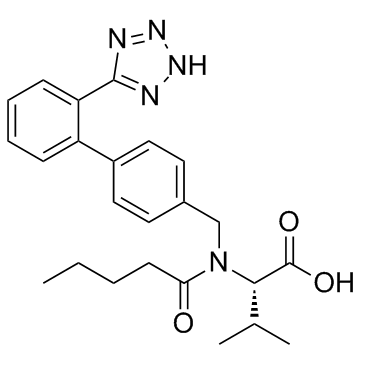
Valsartan
Therapy
: Cardiometabolic diseases
Target
: AT1
CAS
: 137862-53-4
MF
: C24H29N5O3
MW
: 435.52
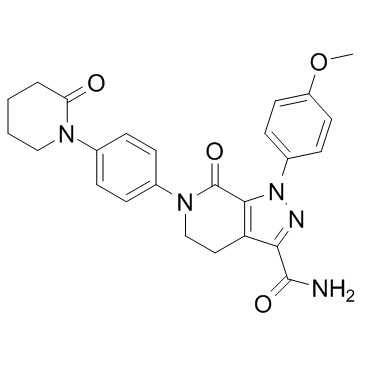
Apixaban
Therapy
: Cardiometabolic diseases
Target
: F10
CAS
: 503612-47-3
MF
: C25H25N5O4
MW
: 459.5
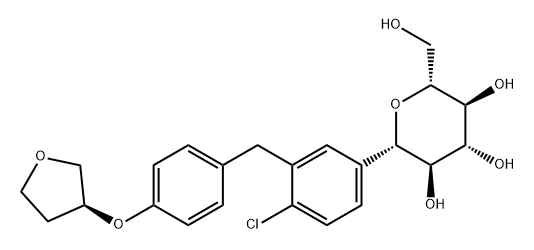
Empagliflozin
Therapy
: Cardiometabolic diseases
Target
: SGLT2
CAS
: 864070-44-0
MF
: C23H27ClO7
MW
: 450.91
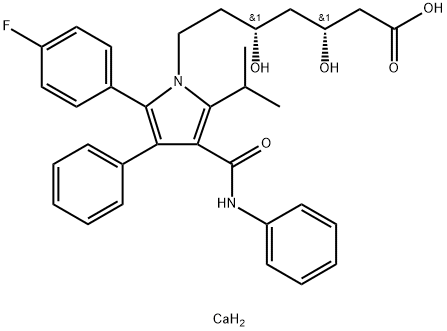
Atorvastatin Calcium
Therapy
: Cardiometabolic diseases
Target
: HMGCR
CAS
: 134523-03-8
MF
: C33H37CaFN2O5
MW
: 600.74