
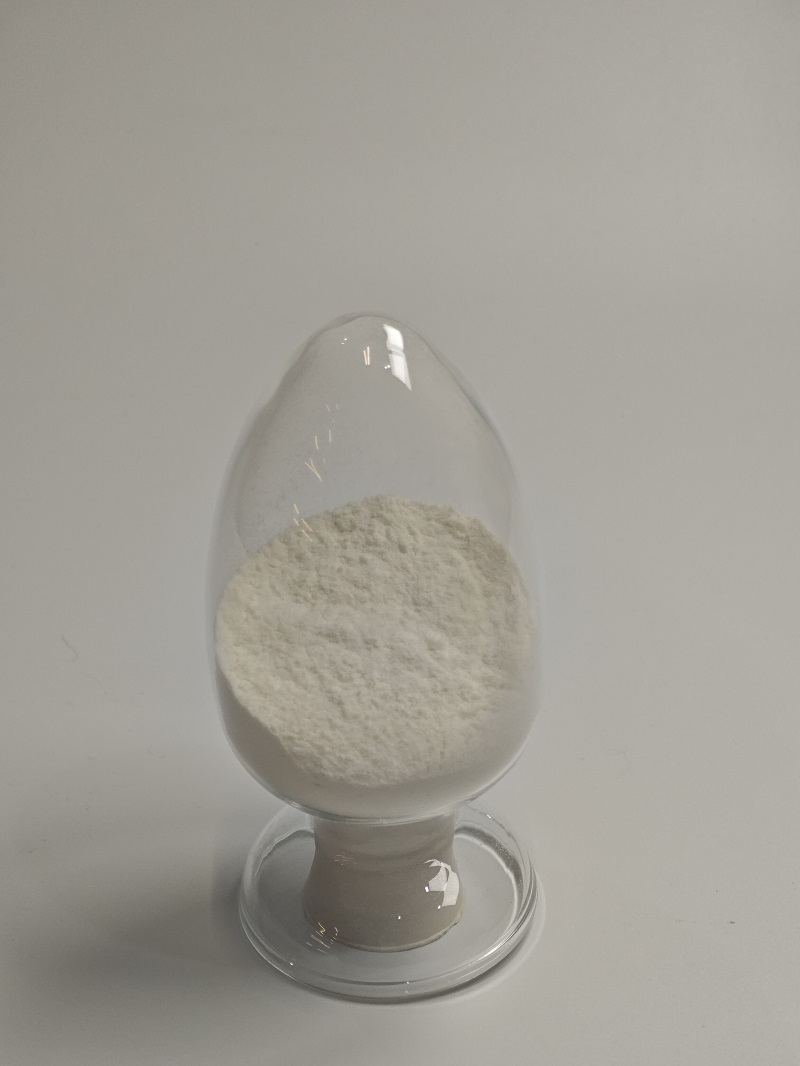
Xanomeline
A selective muscarinic acetylcholine receptor (mAChR) agonist, with particularly high affinity for the M₁ and M₄ subtype receptors, used for the treatment of schizophrenia, psychotic symptoms of Alzheimer's disease.
Overview
Xanomeline is a potent and selective muscarinic type 1 and type 4 (M1/M4) receptor agonist with the effect of increasing neuronal excitability. Xanomeline can be used for research on schizophrenia and other neuropsychiatric disorders.
Synonyms: LY-246708; Lumeron; Memcor; Xanomeline tartrate; BMS-986510; COBENFY; Trospium Chloride+Xanomeline; Xanomeline+trospium chloride; Trospium chloride/LY 246708; Trospium chloride+LY 246708; Xanomeline/trospium chloride; KarXT; Trospium chloride/xanomeline tartrate; Karuna-Xanomeline-Trospium; xanomeline-trospium; Trospium chloride/LY-246708; Xanomeline tartrate/ trospium chloride
Product Categories: cholinergic and anticholinergic drugs; drugs; pharmaceutical raw materials; chemical reagents
Mol File:131986-45-3.mol
Physicochemical Properties
Boiling point: 397.0±42°C(Predicted)
Storage temp: 2-8°C
Solubility: H₂O: Soluble at 10 mg/mL, transparent (when heated)
Form: Powder
Color: Off-white
MSDS Information
Experimental Data
1. Cell Experiment
Solubility in Ethanol: ≥ 100 mg/mL (355.34 mM);Solubility in DMSO: 25 mg/mL (88.84 mM; sonication-assisted dissolution); Hygroscopic DMSO has a significant impact on the solubility of the product, so please use freshly opened DMSO. (* "≥" means soluble, but saturation unknown.)
Preparing Stock Solutions:
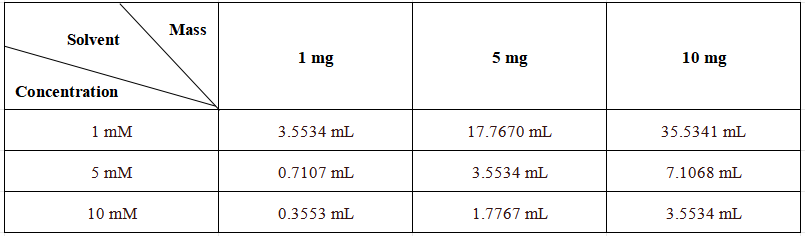
Please choose the appropriate solvent to prepare the stock solution according to the solubility of the product in different solvents; Once prepared into a solution, please store it in separate packages to avoid product failure caused by repeated freezing and thawing.Storage method and duration of stock solution: -80°C, 6 months; -20°C, 1 month。 Use within 6 months when stored at -80°C, and within 1 month when stored at -20°C.
2. Animal Experiment
Choose the appropriate dissolution protocol based on your experimental animal and mode of administration.
For the following dissolution schemes, please prepare the clarified stock solution according to the in vitro method, and then add the co-solvent in turn:
- In order to ensure the reliability of the experimental results, the clarified stock solution can be properly stored according to the storage conditions; It is recommended that you use the working solution for in vivo experiments and use it on the same day;
The percentages shown before the following solvents are the proportion of the volume of that solvent in your final solution; If precipitation and precipitation occur during the preparation process, it can be dissolved by heating and/or ultrasound.
Option 1
Add each solvent in order: 10% EtOH , 40% PEG300 , 5% Tween-80, 45% Saline.
Solubility: ≥10 mg/mL (35.53 mM); Clear Solution
A clarified solution of ≥ 10 mg/mL (saturation unknown) is obtained for this protocol.
For example, take 100 μL of 100.0 mg/mL of clarified EtOH stock solution and add it to 400 μL of PEG300 and mix well. Add 50 μL of Tween-80 to the above system and mix well; Then proceed with 450 μL of normal saline to 1 mL.
Preparation of normal saline: 0.9 g of sodium chloride dissolved in ddH₂O and fixed to 100 mL can obtain a clear and transparent normal saline solution.
Option 2
add each solvent in order: 10% EtOH 90% Corn Oil
Solubility: ≥10 mg/mL (35.53 mM); Clear Solution.
A clarified solution of ≥ 10 mg/mL (saturation unknown) is available for this protocol, and this protocol is used as appropriate in animal experiments with experimental cycles of more than half a month.
For example, take 100 μL of 100.0 mg/mL of clarified EtOH stock solution and add it to 900 μL of corn oil and mix well.
Option 3
Add each solvent in order: 10% DMSO , 40% PEG300, 5% Tween-80, 45% Saline.
Solubility: ≥ 1 mg/mL (3.55 mM); Clear solution
A clarified solution of ≥ 1 mg/mL (saturation unknown) is obtained for this protocol.
For example, take 1 mL of working solution and add 100 μL of 10.0 mg/mL of clarified DMSO stock solution to 400 μL of PEG300 and mix well. Add 50 μL of Tween-80 to the above system and mix well; Then proceed with 450 μL of normal saline to 1 mL.
Preparation of normal saline: 0.9 g of sodium chloride dissolved in ddH₂O and fixed to 100 mL can obtain a clear and transparent normal saline solution.
Option 4
Add each solvent in order: 10% DMSO, 90% (20% SBE-β-CD in Saline).
Solubility: ≥ 1 mg/mL (3.55 mM); Clear solution
A clarified solution of ≥ 1 mg/mL (saturation unknown) is obtained for this protocol.
For example, take 100 μL of 10.0 mg/mL of clarified DMSO stock solution and add 900 μL of 20% SBE-β-CD saline in water and mix well.
2 g of SBE-β-CD (sulfonbutyl ether β-cyclodextrin) powder is set in 10 mL of normal saline and completely dissolved until clear.
Option 5
Add each solvent in order: 10% DMSO, 90% Corn Oil.
Solubility: ≥ 1 mg/mL (3.55 mM); Clear solution
A clarified solution of ≥ 1 mg/mL (saturation unknown) is available for this protocol, as appropriate for animal experiments with an experimental period of more than half a month.
For example, 100 μL of 10.0 mg/mL of clarified DMSO stock solution is added to 900 μL of corn oil and mixed well.
Pharmacodynamics
Mechanism Of Action
The efficacy of xanomeline in the treatment of schizophrenia is thought to be due to its agonist activity at muscarinic acetylcholine receptors M1 and M4 in the central nervous system.It binds to muscarinic receptors M1 to M5 with comparable affinity and exhibits relatively higher agonist activity at the M1 and M4 receptors.
Similar Products
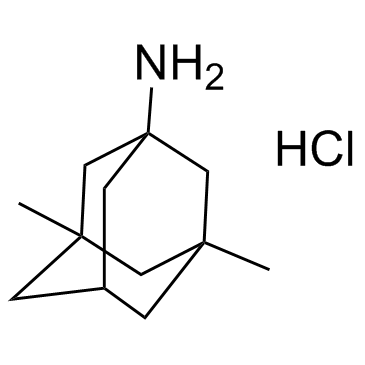
Memantine HCl
Therapy
: Central nervous system and pain
Target
: NMDAR
CAS
: 41100-52-1
MF
: C12H21N•HCl
MW
: 215.76
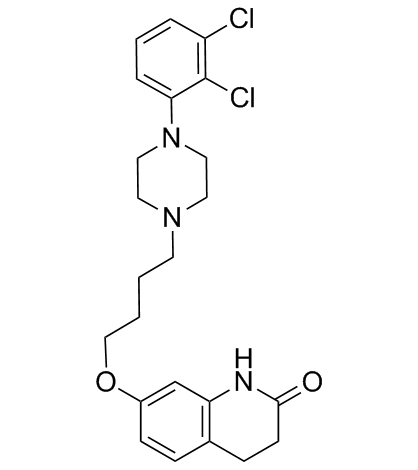
Aripiprazole
Therapy
: Central nervous system and pain
Target
: 5-HT1A;DRD3;5-HT7;DRD4;5-HT2C;5-HT2A;ADRA1A;DRD2;HRH1
CAS
: 129722-12-9
MF
: C23H27Cl2N3O2
MW
: 448.39
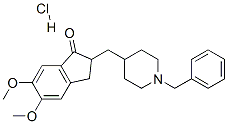
Donepezil Hydrochloride
Therapy
: Central nervous system and pain
Target
: AChE
CAS
: 120011-70-3
MF
: C24H30ClNO3
MW
: 415.95
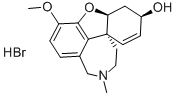
Galantamine HBr
Therapy
: Central nervous system and pain
Target
: AChE
CAS
: 1953-04-4
MF
: C17H22BrNO3
MW
: 368.27