
Continuous Flow Technology Revolutionizes API Synthesis: A Dual Breakthrough in Efficiency and Safety
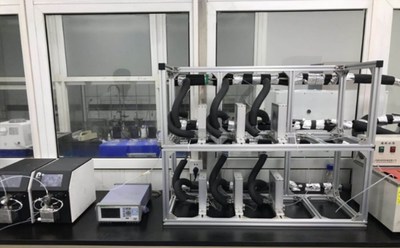
Continuous flow technology, centered on microreactors, significantly reduces API synthesis time through highly efficient mass transfer and precise temperature control. It also mitigates risks of hazardous reactions at a physical level, bringing breakthroughs in both efficiency and safety to the pharmaceutical industry.
Recently, a technological innovation focusing on the synthesis of active pharmaceutical ingredients (APIs) has attracted industry attention. Flow chemistry, or continuous flow technology, leveraging core innovations such as microreactors, is breaking the constraints of traditional batch synthesis, achieving a leap in efficiency and an upgrade in safety, and bringing about a profound transformation in the production logic of the pharmaceutical industry.
Traditional API batch synthesis has long been plagued by three major challenges: safety risks in handling highly exothermic reactions and toxic intermediates, long reaction cycles (e.g., a certain API produced by Novartis requires 300 hours) coupled with significant scale-up effects, and chiral control that relies on high-cost resolution or complex catalysis. In contrast, flow chemistry achieves a "spatial dimensionality reduction breakthrough" through microreactors: microchannels with an inner diameter of < 1 mm increase mass transfer rates by 10-100 times, and their high specific surface area enables precise temperature control. For instance, the synthesis of ibuprofen completes 3 reaction steps in 3 minutes, while the synthesis time of olanzapine is reduced by 90%. In terms of safety, this technology "tames" hazardous reactions through microscale control: the residence time of azides is < 1 minute, the inventory is < 1 mL, the exposure to phosgene is reduced from the kilogram level to < 10 mg/h, and the reactor volume is scaled down from 1500 L to 0.7 L, thereby physically isolating risks.
Flow chemistry has also made breakthroughs in addressing the chiral challenges of API synthesis: the Kobayashi research team immobilized chiral catalysts to achieve the continuous synthesis of (S)-ropinirole (with 94% enantioselectivity), while the Zeitler team combined photocatalysis with chiral catalysis to achieve an 86% yield for α-alkylation. In the future, this technology will further advance toward modular factories, intelligent process analysis (PAT + AI), and green solvents (such as supercritical CO₂). Industry insiders point out that flow chemistry is not merely a technological iteration; it has even subverted the traditional logic of "ton-scale production" for APIs, injecting new impetus into the high-quality development of the pharmaceutical industry.