
Enmetazobactam
A beta-lactamase inhibitor; used in combination with beta-lactam antibiotics (such as cefepime) to restore their activity against resistant bacteria by inhibiting certain enzymes that would otherwise inactivate the antibiotic.
Overview
Enmetazobactam is a penicillanic acid sulfone extended-spectrum beta (β)-lactamase (ESBL) inhibitor. Because ESBL enzymes can hydrolyze important antibiotics such as penicillins, broad-spectrum cephalosporins and monobactams, ESBL-producing bacteria poses challenges in the treatment of serious infections.
Synonyms: AAI-101; OCID-5090
Product Categories: Anti-Bacterial Agents; beta-Lactamase Inhibitors; Cytochrome P-450 CYP2E1 Inhibitors
Mol File: 1001404-83-6.mol
Physicochemical Properties
Storage temp: Store at -20°C, protect from light, stored under nitrogen
Solubility: DMSO: 113.3(Max Conc. mg/mL); 360.46(Max Conc. mM)
Form: Solid
Color: White to Off-white
MSDS Information
Experimental Data
1. Cell Experiment
DMSO: ≥ 113.3 mg/mL (360.46 mM)
*"≥" indicates soluble, but the saturation solubility is unknown.
Preparing Stock Solutions:
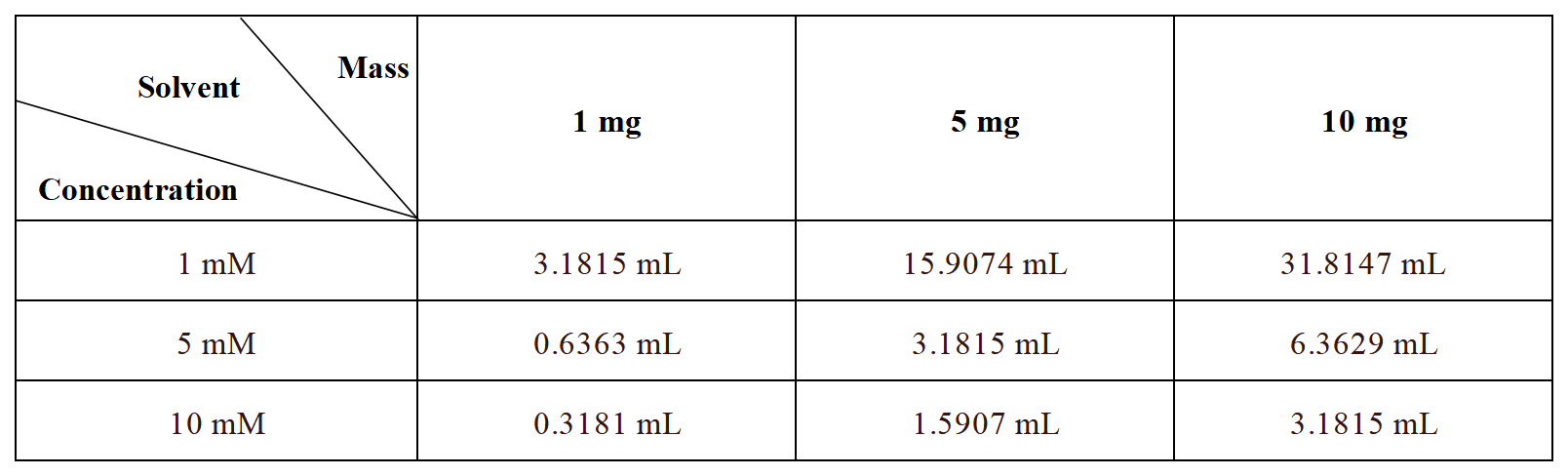
Please prepare the stock solution in the appropriate solvent based on the product's solubility in different solvents. Once dissolved, aliquot the solution to avoid product inactivation caused by repeated freeze-thaw cycles.
Storage method and shelf life of the stock solution: -80°C, 6 months; -20°C, 1 month (protect from light, stored under nitrogen). When stored at -80°C, please use within 6 months; when stored at -20°C, please use within 1 month.
2. Animal Experiment
Please select the appropriate dissolution protocol based on your experimental animals and administration method. For the following protocols, first prepare a clear stock solution in vitro, then add co-solvents in sequence:
To ensure reliable experimental results, the clear stock solution can be stored appropriately according to the storage conditions. For in vivo experiments, it is recommended to prepare the working solution fresh and use it on the same day.
The percentages shown before the solvents refer to the volume percentage of each solvent in the final solution. If precipitation occurs during preparation, heating and/or sonication can be used to aid dissolution.
Protocol 1
Add each solvent in the following order: 10% DMSO, 40% PEG300, 5% Tween-80, 45% Saline
Solubility: ≥ 2.08 mg/mL (6.62 mM); Clear solution
This protocol yields a clear solution with a concentration of ≥ 2.08 mg/mL (6.62 mM, saturation unknown).
Preparation example for a 1 mL working solution:
Take 100 μL of the 20.8 mg/mL clear DMSO stock solution and add it to 400 μL of PEG300, mix well. Then add 50 μL of Tween-80 to the mixture and mix thoroughly. Finally, add 450 μL of normal saline to bring the volume to 1 mL.
Protocol 2
Add each solvent in the following order: 10% DMSO, 90% (20% SBE-β-CD in Saline)
Solubility: ≥ 2.08 mg/mL (6.62 mM); Clear solution
This protocol yields a clear solution with a concentration of ≥ 2.08 mg/mL (6.62 mM, saturation unknown).
Preparation example for a 1 mL working solution:
Take 100 μL of the 20.8 mg/mL clear DMSO stock solution and add it to 900 μL of a 20% SBE-β-CD solution in saline, mix well.
Protocol 3
Add each solvent in the following order: 10% DMSO, 90% Corn Oil
Solubility: ≥ 2.08 mg/mL (6.62 mM); Clear solution
This protocol yields a clear solution with a concentration of ≥ 2.08 mg/mL (6.62 mM, saturation unknown). This protocol is not suitable for experiments lasting longer than half a month.
Preparation example for a 1 mL working solution:
Take 100 μL of the 20.8 mg/mL clear DMSO stock solution and add it to 900 μL of corn oil, mix well.
Pharmacodynamics
Enmetazobactam is an antibacterial agent that is active against most gram-positive and gram-negative bacteria.
Mechanism Of Action
Extended-spectrum beta-lactamases (ESBLs) are a group of bacterial serine beta-lactamases that hydrolyze third-generation cephalosporins (3GC), leading to the development of 3GC-resistant bacteria. When used in combination with cefepime, enmetazobactam protects cefepime from degradation by ESBLs and prevents antibiotic resistance.
Similar Products
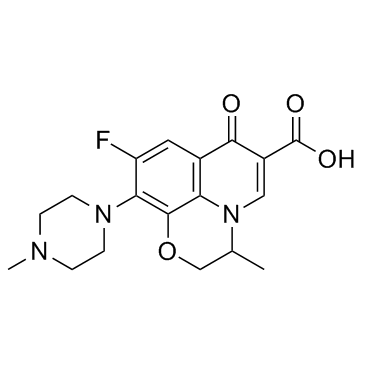
Ofloxacin
Therapy
: Infectious diseases
Target
: Topoisomerase IV;Bacterial DNA gyrase
CAS
: 82419-36-1
MF
: C18H20FN3O4
MW
: 361.4
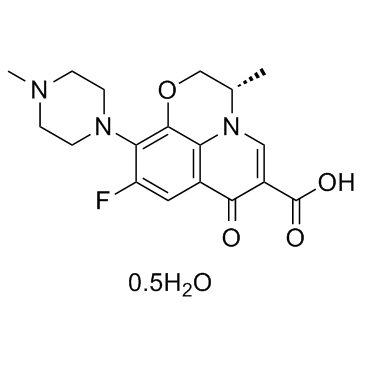
Levofloxacin heMihydrate
Therapy
: Infectious diseases
Target
: Topoisomerase IV;Bacterial DNA gyrase
CAS
: 138199-71-0
MF
: C18H22FN3O5
MW
: 379.39

Oseltamivir Phosphate
Therapy
: Infectious diseases
Target
: NA
CAS
: 204255-11-8
MF
: C16H28N2O4•H3PO4
MW
: 410.4
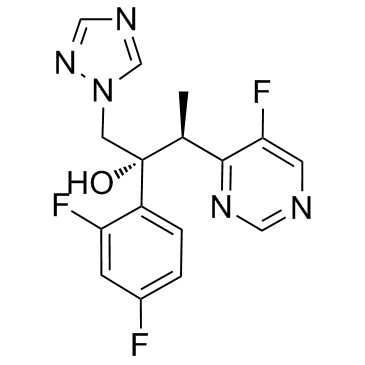
Voriconazole
Therapy
: Infectious diseases
Target
: CYP51A1
CAS
: 137234-62-9
MF
: C16H14F3N5O
MW
: 349.31