
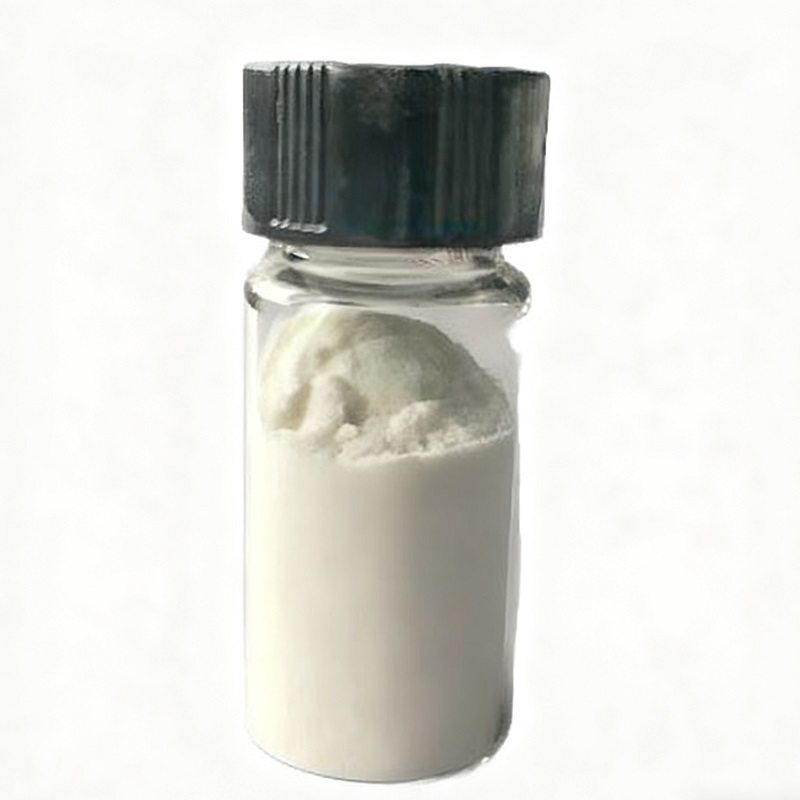
Paltusotine
A somatostatin receptor agonist used to treat acromegaly in adults whose surgery is not an option or has not been effective.
Overview
Paltusotine is a potent, once-daily, oral, non-peptide somatostatin receptor (SSTr) agonist with high selectivity for the SST2 receptor. It inhibits growth hormone (GH) secretion, thereby reducing insulin-like growth factor-1 (IGF-1) levels. Paltusotine is being developed for the treatment of acromegaly and neuroendocrine tumors (NETs), including gastroenteropancreatic neuroendocrine tumors (GEP-NETs).
Synonyms: CRN-00808; PALSONIFY
Product Categories: Heterocyclic Compounds; Peptide Mimetics; G Protein-Coupled Receptors/G Proteins; Somatostatin Receptor; Endocrine; API; BCRP/ABCG2 Substrates; BSEP/ABCB11 Inhibitors
Mol File: 2172870-89-0.mol
Physicochemical Properties
Storage temp: -20℃
Solubility: DMSO: 20 mg/mL (43.81 mM; ultrasonic and warming and heat to 60°C)
Form: Solid
MSDS Information
Experimental Data
Pharmacodynamics
Paltusotine, a somatostatin receptor agonist, reduces IGF-1 levels in acromegaly patients in a dose-dependent manner across the 20 to 60 mg therapeutic dose range. Paltusotine may inhibit gallbladder contractility and decrease bile secretion, potentially leading to gallbladder stones or sludge. Paltusotine can also cause changes in glucose metabolism, potentially resulting in hyperglycemia or, less commonly, hypoglycemia. Somatostatin analogs, including paltusotine, may suppress thyroid-stimulating hormone secretion, potentially leading to hypothyroidism. Additionally, they can inhibit pancreatic enzyme and bile acid secretion, potentially causing malabsorption of dietary fats and steatorrhea. Decreased vitamin B12 levels have also been observed.
Mechanism Of Action
Acromegaly is a hormonal disorder associated with excessive secretion of growth hormone (GH) and subsequent increase in the production of insulin-like growth factor I (IGF-I). Similar to the natural hormone somatostatin, paltusotine suppresses GH and IGF-1 secretion. Paltusotine exerts its pharmacological activity via selective agonism (>4000-fold) at somatostatin receptor 2 (SSTR2) and exhibits little or no affinity for other SST receptor subtypes. Paltusotine inhibited cyclic adenosine monophosphate accumulation via human SSTR2 activation with an average drug (agonist) concentration that results in half-maximal response (EC50) of 0.25 nM.
Similar Products
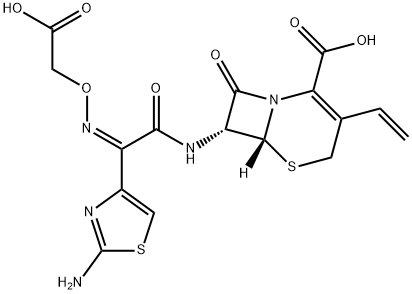
Cefixime
Therapy
: Infectious diseases
Target
: PBPs
CAS
: 79350-37-1
MF
: C16H15N5O7S2
MW
: 453.45
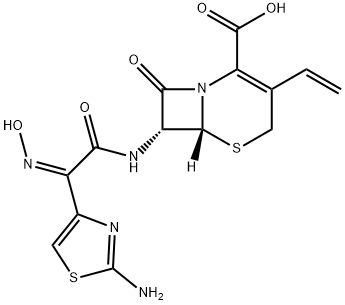
Cefdinir
Therapy
: Infectious diseases
Target
: PBPs
CAS
: 91832-40-5
MF
: C14H13N5O5S2
MW
: 395.41
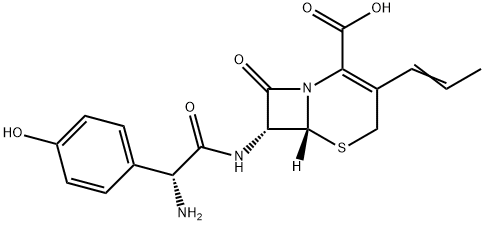
Cefprozil
Therapy
: Infectious diseases
Target
: PBPs
CAS
: 92665-29-7
MF
: C18H19N3O5S
MW
: 389.43
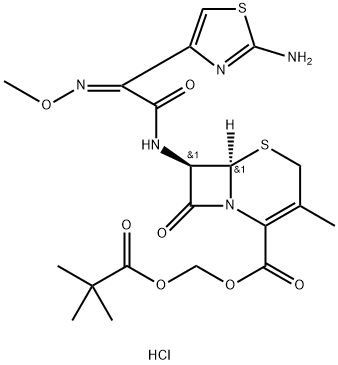
Cefetamet Pivoxil Hydrochloride
Therapy
: Infectious diseases
Target
: PBPs
CAS
: 111696-23-2
MF
: C20H25N5O7S2•HCl
MW
: 548.03